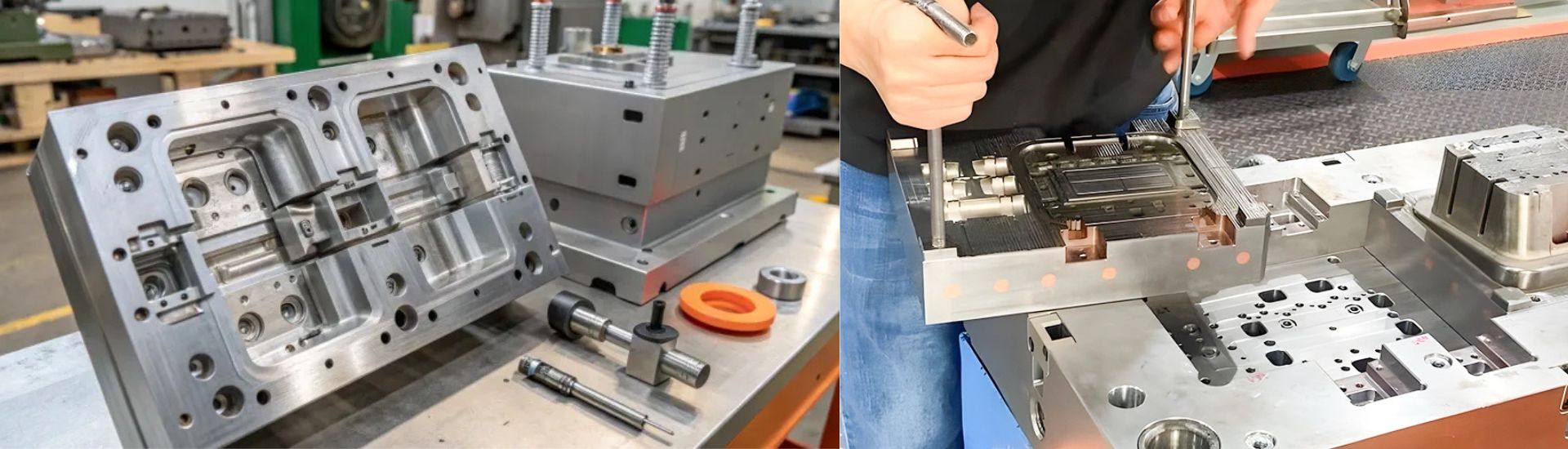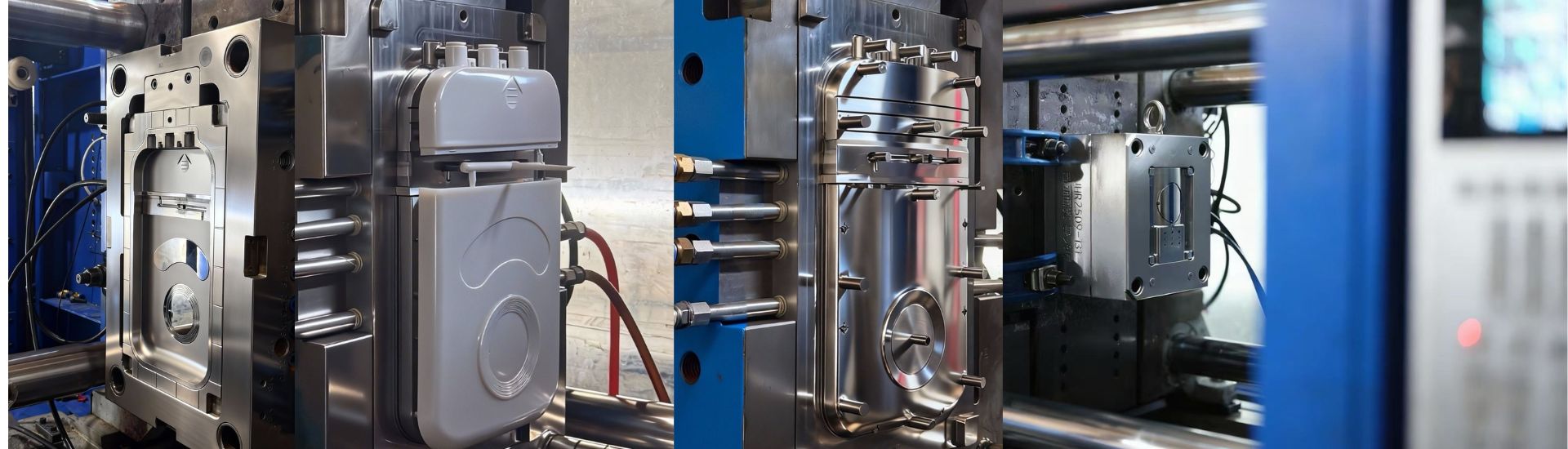


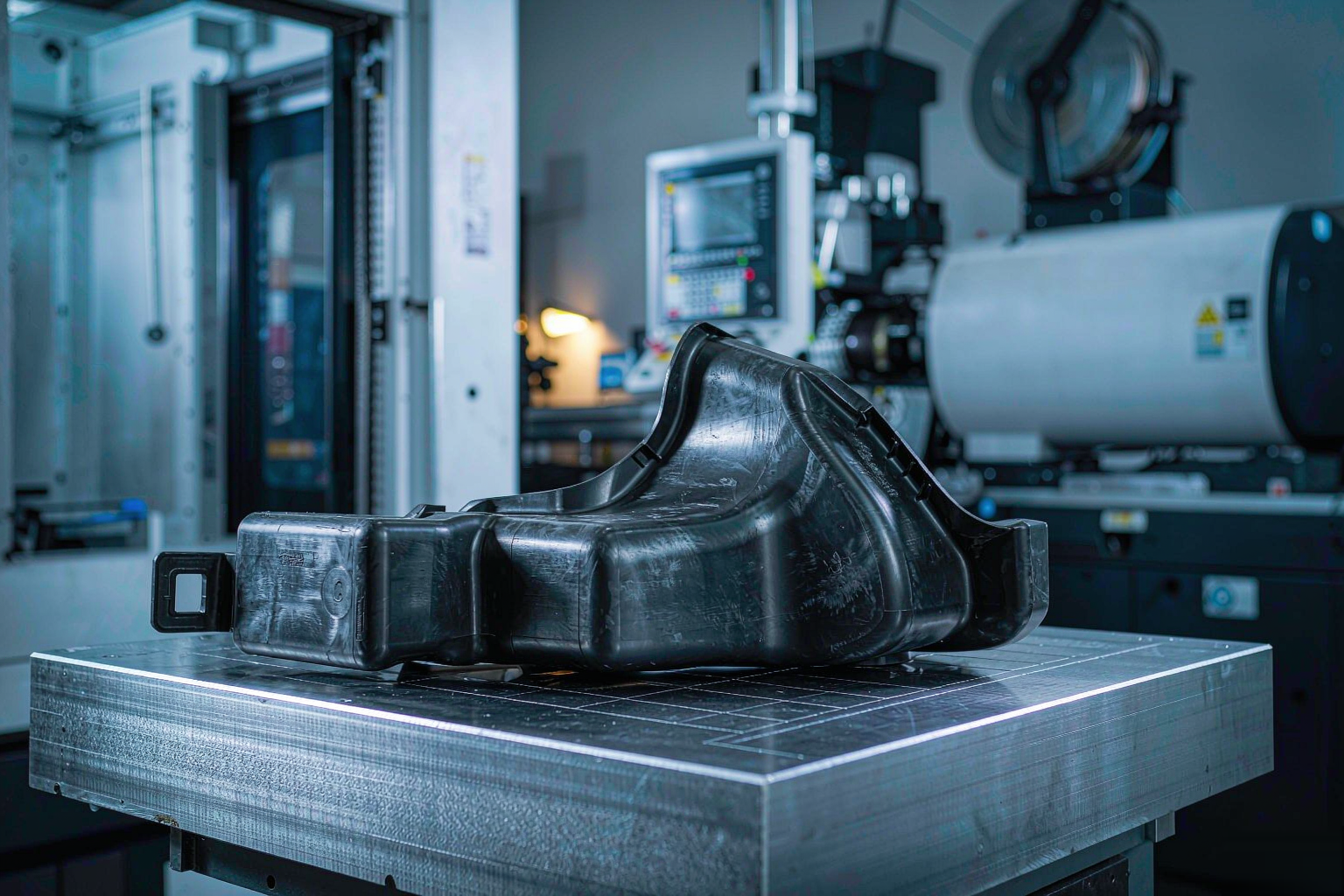
A modern car contains roughly 300–400 injection molded plastic parts, from bumper fascias and dashboard panels to connector housings, fuel system components and under-hood covers. Plastics now account for around 20% of a typical vehicle’s weight, and almost all of it starts as an injection mold. That makes automotive injection molding one of the most demanding — and most rewarding — branches of the plastics industry.
But automotive work is not consumer-product work with bigger volumes. The tolerances are tighter, the validation requirements are heavier, and a mistake that would be a cosmetic issue on a consumer gadget can become a recall on a car. This guide walks you through the three things every automotive buyer or engineer needs to get right: materials, tolerances and cost — and how to plan for them before steel is cut.
Why Automotive Injection Molding Is a Different Game
Three forces separate automotive programs from general plastics work:
- Volume and program life. A successful part may run for five to ten years across vehicle model cycles, often in the hundreds of thousands to millions of shots. The mold must be built — and maintained — for the long haul.
- Environment. Interior parts see sunlight, heat and cosmetics standards. Under-hood parts see –40 °C to 120 °C+ thermal cycling, oils, coolants and vibration. Every material choice must survive its real environment, not just the drawing.
- Regulation and validation. Automotive suppliers work inside the IATF 16949 quality framework, with PPAP submissions, capability studies and full material traceability (IMDS/REACH). A consumer-grade supplier cannot simply “step up” to automotive without these systems in place.
Understanding these forces first makes every downstream decision — resin, steel, tolerances, price — much easier to evaluate.
The Most Common Automotive Injection Molding Materials
Material selection in automotive is driven by the part’s location in the vehicle and what that location demands:
- Polypropylene (PP) — the workhorse of automotive plastics. Bumpers, interior trim, battery trays, fluid reservoirs and ducting. Excellent chemical resistance, low cost, good fatigue performance (living hinges), and available in talc-filled grades for stiffness and low thermal expansion.
- ABS — interior trim, dashboard substrates and parts where surface appearance matters. Easy to mold, paints and textures well, good impact strength. Needs UV stabilization for any sun-exposed application.
- PC/ABS blends — instrument panels, center console bezels and structural interior parts. Combines PC’s heat and impact resistance with ABS’s processability. Higher material cost, but often the only way to hit both aesthetic and crashworthiness targets.
- PA6 / PA66 with 30% glass fiber (GF30) — the standard for under-hood mechanical parts: air intake manifolds, engine covers, connectors, brackets and charge-air ducting. Handles continuous heat, stiffness and creep demands that unfilled resins cannot. Watch for moisture absorption and warpage in the design phase.
- POM (acetal) — gears, seat-belt components, fuel system parts, window mechanism hardware. High stiffness, low friction, excellent dimensional stability and fuel resistance.
- TPE / TPV — soft-touch grips, seals, gaskets and vibration dampers, often overmolded onto a rigid PP or PA substrate for a two-material part.
- Flame-retardant and specialty grades — connectors, electronics housings and battery components often require UL94 V-0 rated compounds, sometimes with glow-wire requirements.
If you want a deeper dive into how these resins compare for general molding, see our Plastic Material Selection Guide (PP, ABS, PC, PA & POM).
Quick Reference: Automotive Material Selection Table
| Material | Typical Automotive Applications | Key Property | Watch-outs |
|---|---|---|---|
| PP (plain / talc-filled) | Bumpers, trim, battery trays, ducts | Chemical resistance, cost | Thermal expansion, sun exposure |
| ABS | Interior trim, dashboards | Appearance, impact | Needs UV stabilization |
| PC/ABS | Instrument panels, bezels | Heat + impact combined | Higher resin cost, scratch |
| PA6/PA66-GF30 | Under-hood, connectors, brackets | Heat, stiffness, creep | Moisture uptake, warpage |
| POM | Gears, seat-belt and fuel parts | Stiffness, low friction | Narrower processing window |
| TPE/TPV | Seals, gaskets, soft touch | Elasticity, sealing | Bonding to rigid substrate |
Tolerances: What Automotive Specs Really Require
Automotive drawings are typically dimensioned to ISO 20457 (or an OEM equivalent such as VW, GM or Ford internal standards), which defines tolerance groups by material and feature size. As a rule of thumb:
- General (non-functional) dimensions: commercial tolerances are usually sufficient — roughly ±0.1 to ±0.3 mm for small-to-medium parts.
- Functional dimensions (mating surfaces, hole positions, clip features): typically ±0.05 to ±0.1 mm, achievable with disciplined process control.
- Large visible panels: the challenge is usually not linear tolerance but appearance — flatness/warpage limits, gap-and-flush consistency, and flow marks on A-surfaces.
- Safety-critical parts: expect statistical requirements, not just limits — Cpk ≥ 1.33 as standard, and Cpk ≥ 1.67 for safety-relevant characteristics.
The most expensive mistake we see: buyers blanket-tolerance every dimension tightly “to be safe.” Every unnecessary tight tolerance adds mold-making precision, inspection burden and scrap risk. Tolerance only what functions; let the DFM discussion sort the rest.
Tooling: Steel and Mold Design for Automotive Volumes
Automotive cycle counts change the tooling conversation. A mold expected to run one million shots for an under-hood PA66-GF30 part is a different machine from a 50,000-shot prototyping tool. Typical requirements:
- Steel: pre-hardened P20 class steel suits medium-volume interior parts; fully hardened H13 or S136 (48–52 HRC) is the norm for high-volume and glass-filled applications. For an in-depth comparison, see our Mold Steel Selection Guide (P20, H13, S136 & NAK80).
- Hot runners: most automotive tools above 2–4 cavities use hot runner systems to eliminate runner waste and stabilize cycle time on expensive glass-filled resins.
- A-surface protection: visible parts need careful gate placement (often sequential valve gates), controlled cooling and texture standards such as VDI 3400, with draft angles increased roughly 1° per 0.025 mm of texture depth.
- Cooling design: warpage on large panels is fought in the cooling layout first — baffled or conformal-cooled cores are an investment that pays for itself in PPAP dimensional results.
What Automotive Injection Molding Really Costs
Automotive tooling sits at the higher end of the mold cost spectrum because of steel quality, hot runners and validation overhead. Ballpark ranges for China-built tooling:
- Simple interior/clip tools (small cold-runner, 1–4 cavities): roughly $8,000–20,000.
- Medium tools (visible interior parts, moderate complexity, hot runner): roughly $20,000–60,000.
- Complex A-surface tools (large panels, sequential valve gates, texture, 1M+ shot life): commonly $60,000–150,000+.
Once the mold is amortized across the program volume, tooling often lands at just a few cents per part — which is why the part price and the mold price must be evaluated together, never separately.
| Cost Driver | Where It Hits | How to Control It |
|---|---|---|
| Cycle time | Per-part price dominates at volume | Conformal cooling, rib/wall discipline, gate optimization |
| Material grade | 60–70% of part cost | Specify to function (e.g., talc-filled PP, not over-specified PC) |
| Cavitation & runner | Mold cost + waste | Right-size cavity count to real annual volume |
| Validation burden | Engineering hours, rework loops | Freeze design before tooling; DFM up front |
| Change requests | Steel rework, re-validation | Prototype critical fits before production steel |
Quality and Compliance: IATF 16949, PPAP and Traceability
Even if your molder is excellent, automotive customers audit the system. Before awarding an automotive program, confirm the supplier can deliver:
- IATF 16949-aligned quality management (or ISO 9001 plus a clear automotive add-on plan).
- PPAP documentation at the required level — dimensional reports, material certifications, process capability studies, MSA on gauges, control plan and PFMEA.
- Material traceability — lot-level resin traceability, cavity ID marking, and IMDS/REACH data submissions for the part.
- Error-proofing on safety-relevant characteristics, with poka-yoke in both mold and process.
Ask for this evidence during supplier qualification, not after T1. It is far cheaper to pick a capable molder than to remediate a non-capable one mid-program.
How to Keep Your Automotive Program on Schedule and on Budget
- Bring the molder in during DFM, not after the 3D model is frozen — gate location, draft and weld-line placement all affect both appearance tools and cycle cost.
- Tolerance functionally, not defensively. Tie every tight tolerance to a mating or regulatory reason.
- Match steel to program life. Paying for a 1M-shot hardened tool on a 60k-volume part wastes money; the reverse is worse.
- Pilot before production steel for critical fits — aluminum or soft tools catch shrinkage surprises cheaply.
- Plan the validation calendar around PPAP: T1 samples, dimensional correction loop, capability runs and submission each need real lead time.
- Fix the resin spec in writing — grade, filler content, MFI range and approvals — so material substitutions can never be made silently.
Get a DFM Review and a 12-Hour Quote from D-TOP MOLD
Automotive injection molding rewards early engineering discipline: the right resin, honest tolerances, steel matched to program volume, and a validation plan built in from day one. Getting those four things right before steel is cut is the difference between a smooth PPAP and months of rework.
D-TOP MOLD designs and builds automotive-grade injection molds for interior, under-hood and functional plastic parts, with material selection support, full DFM feedback and mold steel recommendations tailored to your program volume. Send us your 3D model or 2D drawing — we will return a free DFM review and a detailed quotation within 12 hours, and flag any tolerance or material risks before they reach the toolroom.