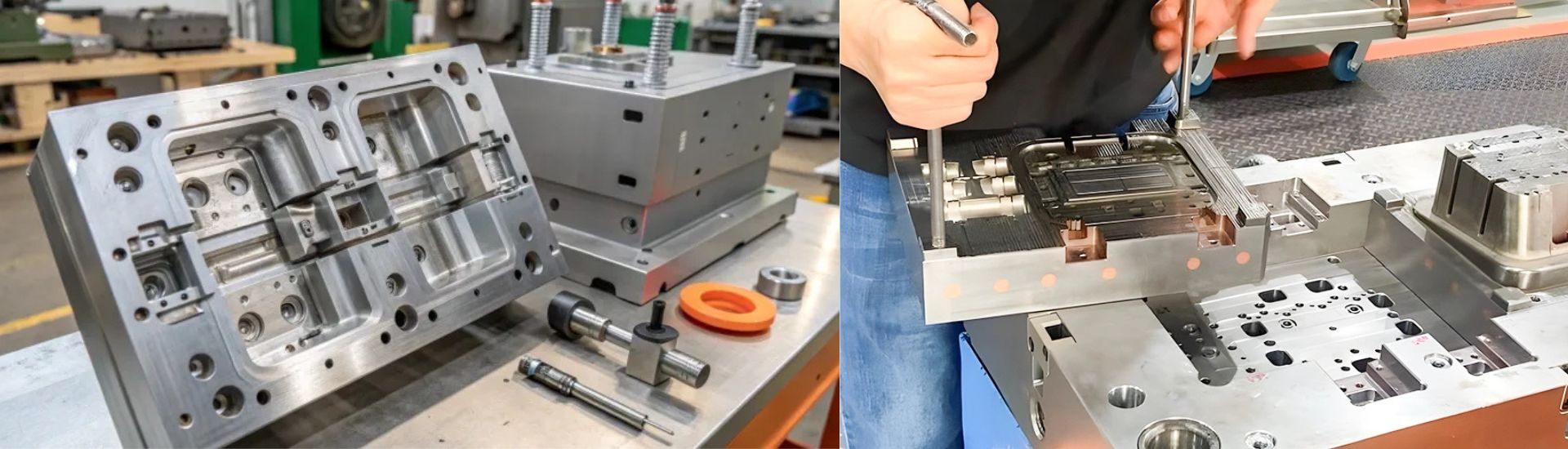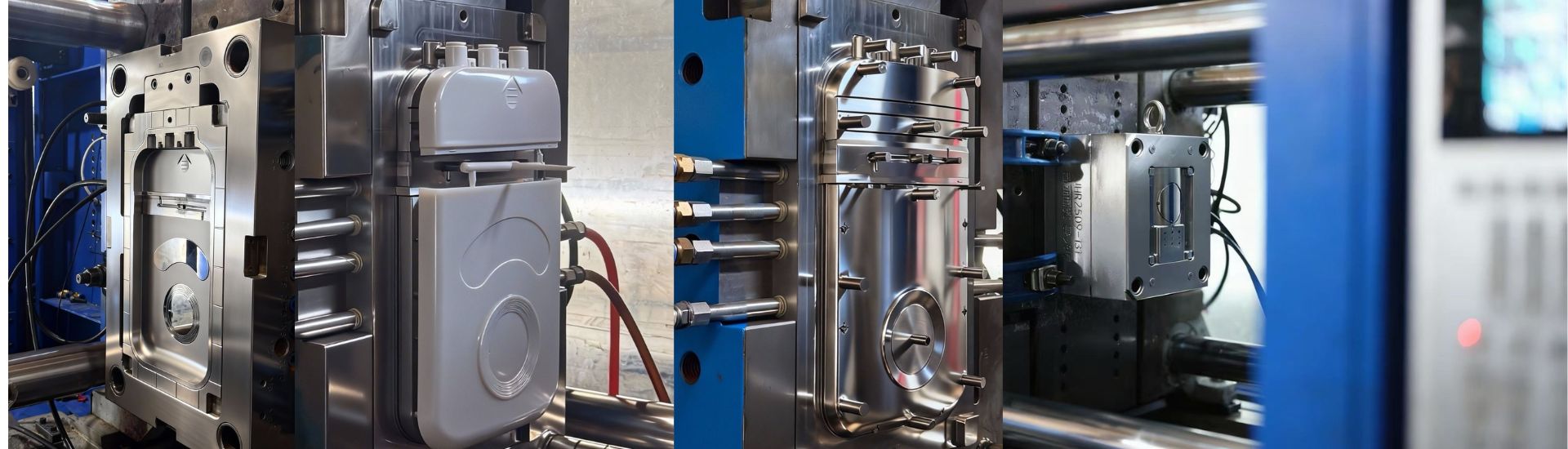


Every injection mold begins as a block of steel. The grade you pick decides how many cycles the tool survives, how well it polishes, how it stands up to abrasive or corrosive resins, and how much the mold costs on day one.
Yet mold steel is one of the most misunderstood decisions in plastic part sourcing. A grade that’s perfect for high-volume polypropylene caps can be an overpriced waste on a short-run ABS housing. Specify the wrong steel and you either pay too much up front — or you pay twice, when the tool wears out early, rusts in storage, or never reaches the surface finish your part needs.
This guide explains the four steel grades that cover the large majority of injection molds — P20, H13, S136 and NAK80 — in plain language. By the end you’ll know what each one is, when to use it, and the questions to ask your mold maker before you approve a tool.
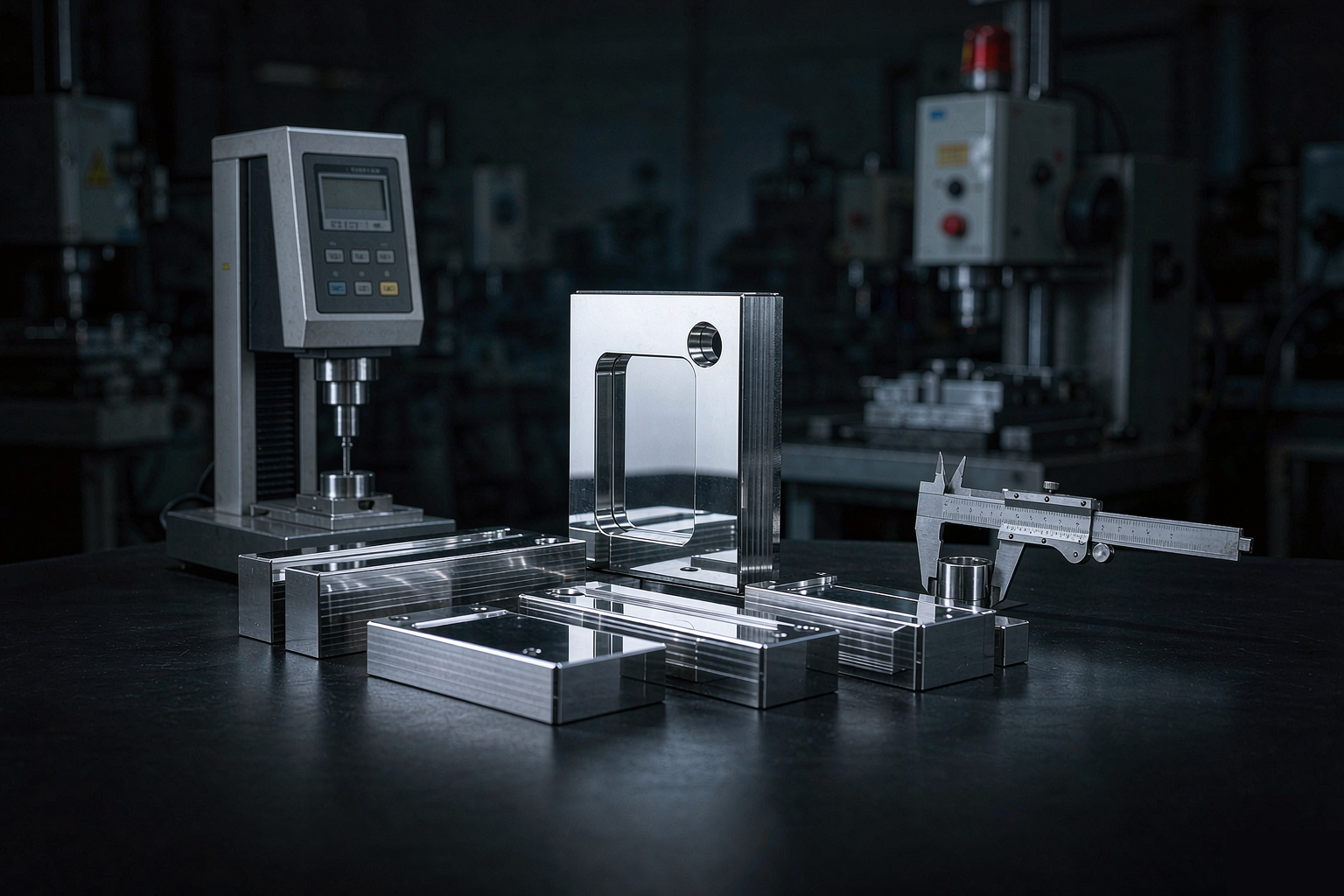
Why Mold Steel Decides Your Tool’s Life (and Price)
Steel is usually the single largest material cost in a mold, and the biggest driver of its working life. Two molds can look identical on the outside but be built from grades that differ in cost by two to three times — and in tool life by ten times.
Three properties do most of the work:
- Hardness — measured on the Rockwell C scale (HRC). Harder steel resists the wear of abrasive, glass-filled resins, but it is harder to machine and can be more brittle.
- Polishability — how fine a mirror finish the surface can take. This is critical for clear parts such as lenses, light guides and cosmetic packaging.
- Corrosion resistance — how well the steel resists rust in humid storage or when running acidic resins like PVC.
It also helps to think in terms of total cost of ownership. A cheaper steel that wears out after 300,000 shots and forces a rebuild — or a new tool — is more expensive than a harder steel that runs two million shots without intervention. The cheapest steel on the quote is rarely the cheapest steel over the life of the program.
Balance those three against production volume, the resin, and the part’s cosmetic requirements, and the right grade usually becomes obvious. Ignore them, and you’ll pay for the mistake somewhere else.
P20 — The All-Round Workhorse
P20 is a pre-hardened, general-purpose mold steel, typically supplied at 28-32 HRC. Because it comes pre-hardened, you cut the cavity directly into the hardened block — there is no heat treatment after machining. That removes a step, shortens lead time, and eliminates the distortion risk that heat treatment brings.
When to choose P20:
- Low-to-medium production volumes (roughly up to a few hundred thousand shots)
- General-purpose resins: ABS, PP, PE, PS, and PC/ABS blends
- Parts without demanding transparency or cosmetic requirements
- Budget-driven programs where you want a dependable tool without overspending
When to skip P20:
- Glass-filled or highly abrasive resins, which will wear the cavity quickly
- Very high volumes, where a harder steel’s extra life pays for itself
- Parts that need a true mirror finish
For a large share of consumer and industrial housings, P20 is the sensible default — good life, good polish, and a reasonable price.
H13 — For Heat, Wear and Abrasive Resins
H13 is a hot-work tool steel and the go-to choice for demanding, high-temperature, high-wear jobs. After heat treatment it typically runs at 48-52 HRC — far harder than P20 — so it shrugs off the abrasion of glass-filled nylon, POM, and other filled or reinforced materials.
When to choose H13:
- Glass-fiber or mineral-filled resins (PA6/PA66-GF, PBT-GF, and similar)
- High-temperature engineering resins
- High-volume production where tool life is the priority
- Textured surfaces that must hold their grain over millions of cycles
The trade-offs: H13 costs more and is harder to machine. Because it needs heat treatment after machining, it also demands tighter process control — and slightly longer lead time — to avoid distortion. But on abrasive or high-heat jobs, H13 is almost always cheaper in the long run than replacing a worn P20 tool.
S136 — The Corrosion-Resistant, Mirror-Polish Choice
S136 is a stainless mold steel, and it solves the two problems that plague ordinary tool steel: rust and limited polish. With strong corrosion resistance and the ability to take an exceptional mirror finish, it is the standard choice for optical and cosmetic parts.
When to choose S136:
- Clear, transparent parts: lenses, light guides, medical disposables, cosmetic packaging
- Parts molded from corrosive or acidic resins, especially PVC
- Humid or uncontrolled storage environments where rust is a real risk
- High-gloss, “Class A” cosmetic surfaces
The trade-offs: S136 costs more than P20, and its soft annealed state must be heat-treated (usually to 48-52 HRC) and then polished — both of which add cost and time. But for a clear or cosmetic part, there is usually no real substitute.
NAK80 — High Hardness and Mirror Polish, Without Heat Treatment
NAK80 is a pre-hardened steel supplied at around 40 HRC, designed specifically for high-polish applications. Unlike S136, it needs no post-machining heat treatment: you machine it, polish it, and it is ready to run. That removes a major source of lead time, distortion and risk.
When to choose NAK80:
- High-gloss or mirror-finish parts
- Transparent or high-clarity parts where S136’s extra corrosion resistance is not required
- Programs that need fast turnaround on a cosmetic tool
- Short-to-medium runs of premium cosmetic parts
The trade-offs: NAK80 is a premium, higher-cost steel, and it is not the first choice for high-volume abrasive-resin production. But for cosmetic and clear parts where speed matters, it often delivers the best balance of finish, hardness and lead time.
P20 vs H13 vs S136 vs NAK80 — Quick Comparison
| Steel | Typical Hardness | Best For | Relative Cost | Notes |
|---|---|---|---|---|
| P20 | 28-32 HRC (pre-hardened) | General-purpose, low-medium volume | Low | No heat treatment; fast and economical |
| H13 | 48-52 HRC (heat-treated) | Abrasive / glass-filled, high-heat, high volume | Medium | Best wear resistance; needs heat treatment |
| S136 | 48-52 HRC (heat-treated) | Clear / optical parts, PVC, cosmetic | High | Stainless, mirror polish, corrosion-proof |
| NAK80 | ~40 HRC (pre-hardened) | High-polish and clear parts, fast turn | High | Mirror finish, no heat treatment |
As a rule of thumb: default to P20 for standard parts, step up to H13 for abrasive or high-volume work, and reach for S136 or NAK80 when the part is clear, cosmetic, or molded from a corrosive resin.
How to Specify Steel Without Getting Burned
Steel grade is only half the story. Three habits separate a good tool from a bad one:
- Ask for the mill certificate. Reputable mold makers can produce the certificate for the exact steel grade used. If they can’t — or won’t — walk away. Steel substitution is one of the most common hidden costs in the industry.
- Confirm hardness after heat treatment. Ask for the HRC reading on the actual cavity and core, not just a verbal claim. Heat treatment can be done poorly, and under-hardened steel defeats the entire purpose.
- Match steel to resin and volume, not to a sales pitch. A supplier pushing the most expensive grade “just to be safe” is wasting your budget; one pushing the cheapest is risking your tool life.
Other Steel Grades Worth Knowing
These four cover the large majority of injection molds, but a specialist application can call for something else. 718H and 2738 are common P20-type alternatives with slightly different properties and availability across regions. S7 is a high-toughness grade used for heavy shock loads and thick sections. And for the most extreme wear — long runs of heavily glass-filled resins — nitrided or coated H13, or even carbide inserts, come into play.
The point is not to memorise every grade. It is to make sure the steel is matched to your resin, volume and finish — and that you can verify what was actually used. A good mold maker will guide you through this conversation rather than defaulting to whatever is cheapest on the shelf.
Get a Free DFM Review and a 12-Hour Quote
Not sure which steel your part actually needs? That’s exactly what a DFM (Design for Manufacturability) review is for — and it should cost you nothing.
At D-top Mould, our engineers review your 3D file, resin and volume, then recommend the steel grade — and the rest of the mold specification — that fits your part. No guesswork, no over-engineering. Send us your drawing or STEP file and we’ll return a complete quotation within 12 hours.