


What Is Thin-Wall Injection Molding?
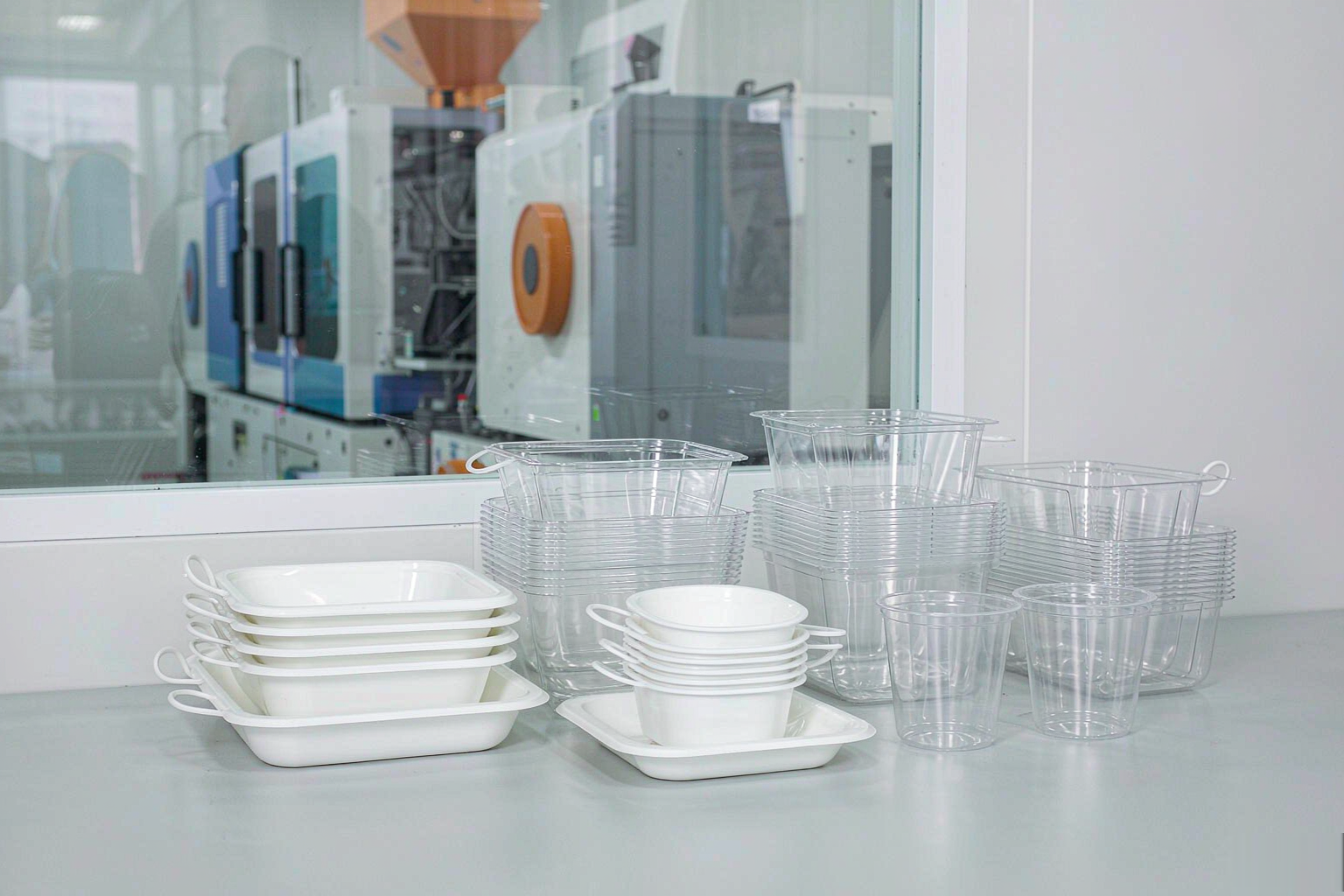
Thin-wall injection molding produces plastic parts with walls typically between 0.5 mm and 1.5 mm — far below the 2–3 mm conventional molding assumes. The payoff is dramatic: less material per part, shorter cooling time, faster cycles and lighter products. The challenge is equally dramatic: molten plastic must fill a narrow gap across the whole cavity before it freezes, which pushes machine, mold and material to their limits.
This is why thin-wall molding is a specialized capability rather than a standard service — it demands high injection speed and pressure, precise mold construction and disciplined process control.
Why Thin-Wall Molding Is Technically Demanding
Plastic freezes quickly in a thin gap. To fill before it solidifies, the process needs:
- Very high injection speed and pressure — the melt front must race across the cavity in a fraction of a second
- Flow-length-to-wall ratio planning — how far the plastic must travel relative to wall thickness decides everything from gate position to machine tonnage
- Rigid, precise tooling — thin walls leave no room for mold deflection; venting must be perfect to avoid burns
- Stable process control — a slight viscosity drift can turn a good part into a short shot
Applications of Thin-Wall Molding
- Packaging — food containers, cups, lids and trays where material cost per unit decides profit
- Consumer electronics — battery covers, housings and internal frames where every millimeter of space counts
- Medical disposables — specimen containers, labware and single-use components
- Household items — lightweight storage and daily-use products at volume
Design Guidelines for Thin-Wall Parts
| Design Factor | Conventional Molding | Thin-Wall Molding |
|---|---|---|
| Wall thickness | 2–3 mm | 0.5–1.5 mm |
| Flow-length/wall ratio | 150–250:1 | Up to 350:1+ with high-speed machines |
| Ribs | 50–60% of wall | 60–80% of wall, tightly spaced |
| Cycle time | 30–60 s | 3–10 s |
Uniform wall is even more critical than in conventional molding — thick sections on a thin part create sink marks and warp instantly. Our DFM checklist applies here with special attention to flow balance and gate count.
Machines and Tooling for Thin-Wall
Thin-wall molding runs best on high-speed injection machines with accumulator-assisted injection, high injection pressure capability and fast clamp response. Molds are built from high-strength steel with generous support pillars, precise venting and balanced hot runner systems — and because cycles run in seconds, tool wear and maintenance intervals are engineered in from the start. Mold flow analysis is strongly recommended for thin-wall projects: it predicts filling before steel is cut.
Materials for Thin-Wall Molding
Polypropylene dominates thin-wall packaging for its flow and cost. High-flow ABS, PC and PA grades serve electronics and technical parts. Material selection hinges on melt flow index — the higher the MFI, the further the plastic travels in a thin gap — balanced against the stiffness the part needs. See our material selection guide for details.
Thin-Wall Molding at D-top Mould
D-top Mould designs and builds thin-wall molds and supports molding for prototype through mass production. Our process covers flow analysis, high-speed tooling design, T1 validation with fill-check on the trial machine, and production support with cycle-optimized parameters. Whether you need the tool only or finished parts as a custom plastic parts supply, the same team owns the result.
Get a Thin-Wall Molding Quote in 12 Hours
Send your 2D or 3D drawings, material, part weight target and annual volume. Our engineering team reviews flow-length feasibility and returns a free DFM review with a detailed quotation within 12 hours — telling you honestly whether your design molds thin-wall or needs a wall revision first.