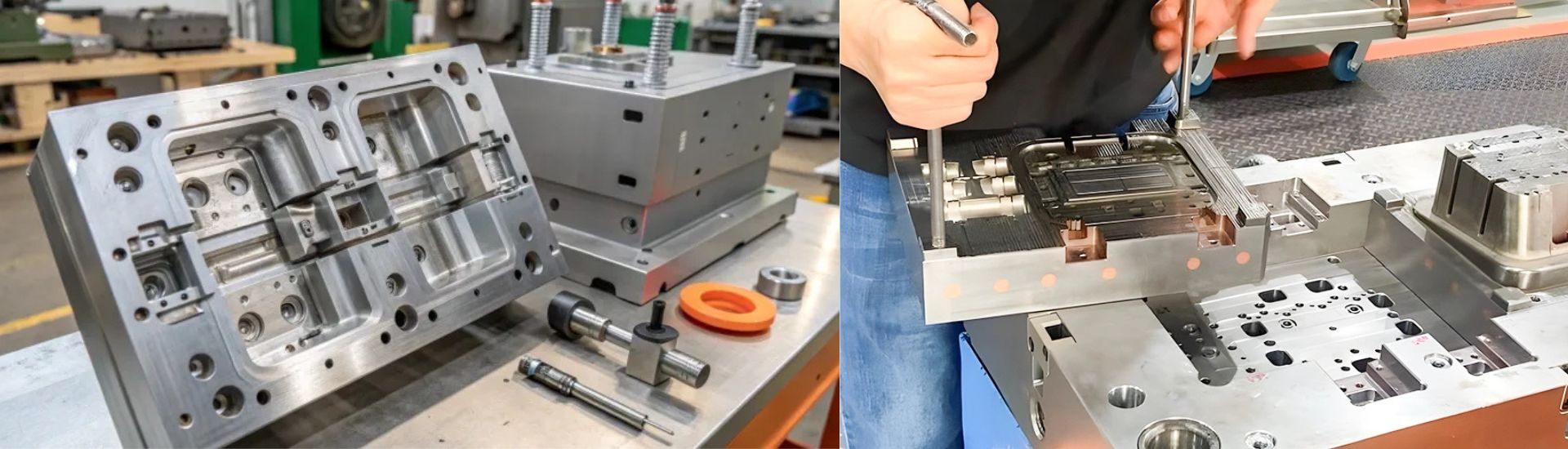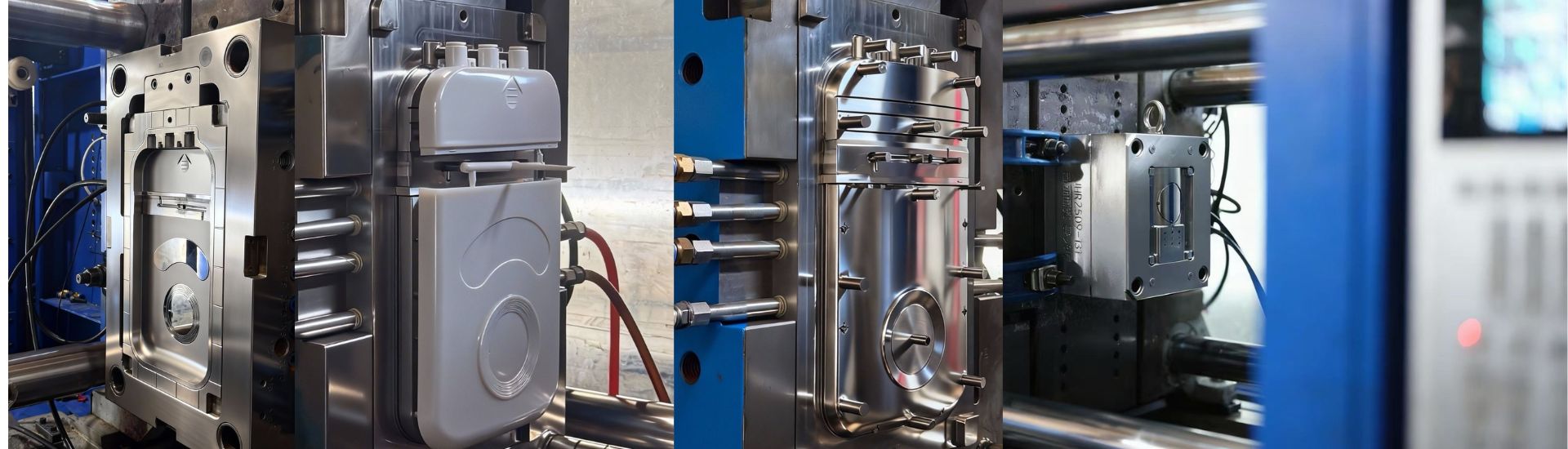


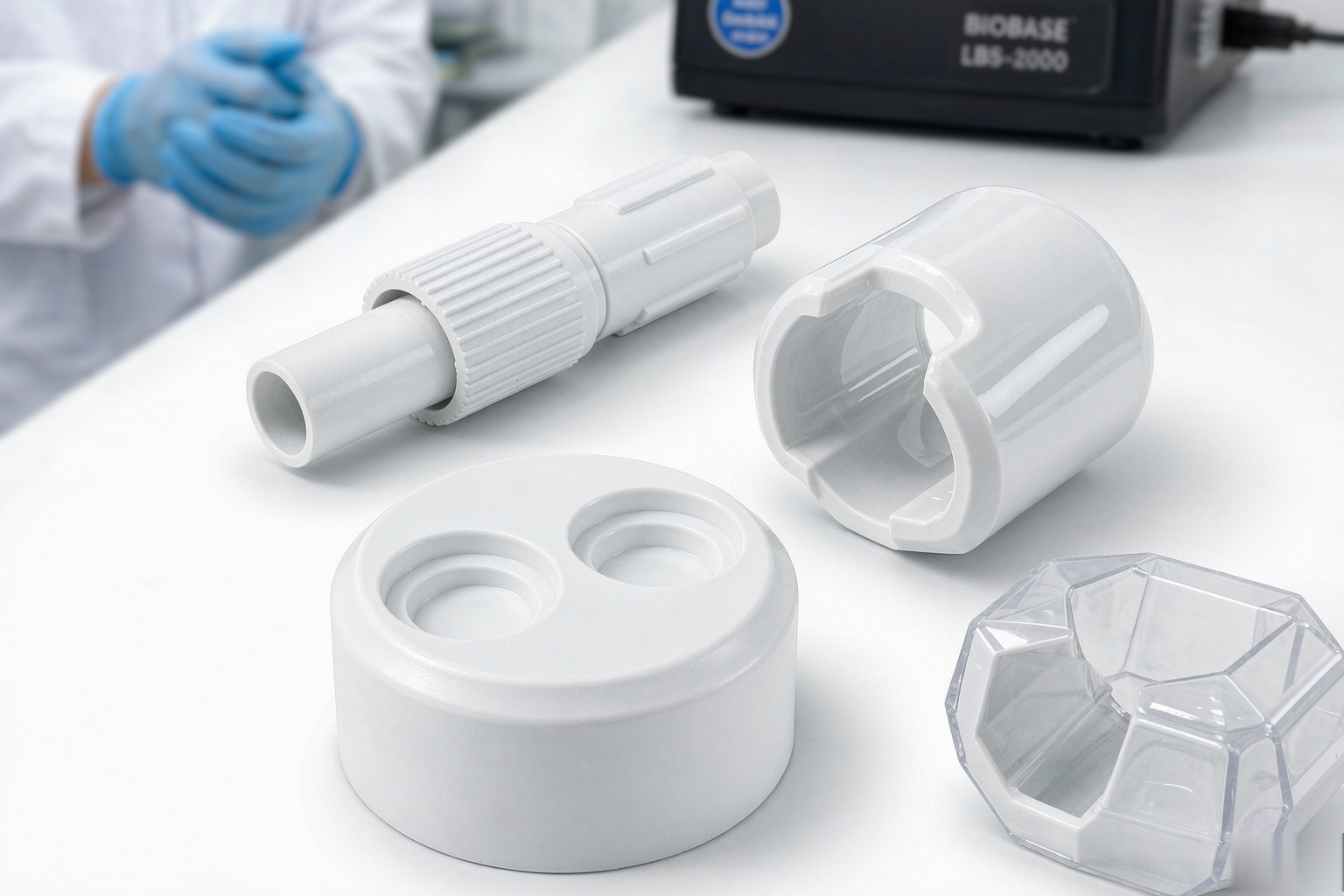
Medical injection molding asks a harder question than almost any other molding market: can you produce the same part, to the same standard, with documented evidence, every single time? A cosmetic defect on a consumer product is a return. The same defect on a diagnostic device housing or a fluid-handling consumable can be a regulatory finding. This guide explains the standards that shape medical molding projects, the materials that survive sterilization and handling, and what validation actually means in practice — so you can brief a molder (or audit one) with confidence.
What Makes Medical Injection Molding Different
The molding physics are identical to any other project: molten resin, steel, pressure, cycle time. What changes is everything around the process. Medical parts carry three extra burdens:
- Traceability — you must be able to connect a finished part back to its resin lot, its cavity and its process parameters.
- Consistency — the process is expected to be stable and proven, not merely adjusted until samples look acceptable.
- Documentation — claims about materials, cleanliness and dimensions must be supported by records your quality system (or your customer’s auditor) can inspect.
None of this is optional, and none of it can be added after the fact. The structure for all three is decided while the mold is still a drawing — which is why the standards below matter before you cut steel, not after.
The Standards That Govern Medical Molding
You do not need to memorize the full text of these standards, but you do need to know which ones apply to your project and what they demand from your molder:
- ISO 13485 — the quality management system standard for medical devices. A molder supplying finished components into a regulated device usually works under a customer’s ISO 13485 framework even when the molder itself is not certified. What matters practically: documented procedures, controlled parameters, calibration, and disciplined handling of nonconforming product.
- ISO 10993 — the biological evaluation series. If your part contacts a patient (even skin contact), the resin needs biocompatibility data. This is a material and documentation question — and it must be settled before tooling, because changing resin after tooling can invalidate everything.
- FDA 21 CFR 820 / EU MDR — depending on your market, the device manufacturer holds the regulatory obligation, and your molder becomes a critical supplier within that system. Expect supplier audits and expect your molder to provide evidence, not promises.
- GMP-style process control — in daily practice this means locked molding parameters, cavity identification, lot segregation, and inspection records tied to actual production data.
One practical warning: a supplier who answers every standards question with “yes, certified” without asking which documents your quality system needs is telling you the paperwork will not survive an audit. A useful partner starts by asking what your notified body or QA team expects, then structures the supply around it.
Materials for Medical Parts
Medical resins must survive sterilization, chemicals and repeated handling while staying body-compatible, and frequently white or transparent. The workhorse materials are well established:
| Material | Key Strengths | Sterilization Tolerance | Typical Medical Use |
|---|---|---|---|
| PP | Chemical resistance, living hinges, low cost | Gamma, EtO (steam with care) | Consumables, trays, caps, containers |
| PC | Impact strength, transparency, heat resistance | Gamma, EtO | Housings, connectors, transparent windows |
| PE | Chemical inertness, low friction | Gamma, EtO | Fluid handling, caps, liners |
| ABS | Surface finish, processability | EtO, gamma (some yellowing) | Device enclosures, cosmetic parts |
| POM | Stiffness, dimensional stability, low friction | EtO, gamma | Mechanisms, pump and valve parts |
| PA (nylon) | Strength, wear resistance | EtO, gamma | Moving components, structural clips |
| PSU / PESU | Repeated steam sterilization, transparency | Steam autoclave (repeated) | Surgical instrument components, labware |
| TPE | Elastomeric sealing, soft touch | EtO, gamma | Gaskets, grips, seals |
Two selection rules worth remembering. First, match the resin to the sterilization method, not just the application — a perfectly good ABS housing can turn yellow under gamma, and a PP part may warp in a steam autoclave. Second, request resin certifications with lot traceability from the first quotation onward; retrofitting documentation onto a running program is slow and expensive. For a broader resin comparison, see our plastic material selection guide.
Sterilization Compatibility: Decide It Early
The sterilization method is one of the earliest decisions in a medical program, and it constrains both material and design:
- Ethylene oxide (EtO) — the most forgiving for materials, but parts must tolerate residual gas entrapment; deep blind pockets and unvented channels complicate aeration.
- Gamma / e-beam — fast and terminal, but high-energy exposure embrittles some resins and yellows others. Transparent PC windows may need stabilizer grades.
- Steam autoclave — the toughest on parts: repeated 121–134°C cycles demand hydrolysis-resistant resins (PSU, PPSU, some POM grades) and wall sections that do not warp.
Tell your molder the intended method at the DFM stage. It changes material recommendations, gate locations (to avoid weld lines in load-bearing, sterilized regions) and even mold cooling design.
What Validation Actually Means
“Validation” is the word most often used and least often understood in medical molding discussions. In practice it is a three-stage proof that your process produces good parts by design, not by operator heroics:
- Installation Qualification (IQ) — the equipment and the mold are installed and verified as specified: machine size, mold identity, calibration records.
- Operational Qualification (OQ) — the process limits are established. Molding trials deliberately vary the key parameters (melt temperature, pack pressure, hold time) to find the edges of the acceptable window.
- Performance Qualification (PQ) — production runs at the chosen settings prove the process holds the window over time, with parts inspected against the drawing.
The outcome is a validated window, not a single lucky shot. The practical implication for buyers: a molder who cannot show you parameter records, trial plans and inspection data cannot hand you a validated process — whatever their marketing says. And a mold designed without validation in mind (no cavity numbering, no gate data, no steel certifications) will fight you every step of the way. Our DFM checklist covers the design-side rules that make validation achievable instead of painful.
Cleanliness and Process Control on the Floor
Beyond the paperwork, medical molding is a discipline of small daily habits: controlled material handling so lots never mix, sealed and cleaned molds before every run, documented parameters that do not drift between shifts, and inspection routines that catch visual defects most applications would ignore. Because the mold shop is in-house at D-top Mould, tooling-related defects are corrected at the source instead of argued about with a subcontractor — and process changes can be traced to their physical cause quickly.
Tooling Choices That Matter for Medical Molds
Medical programs reward tooling investments that general molding sometimes skips:
- Corrosion-resistant or hardened steels (S136, NAK80) where resins are aggressive or surface finish is cosmetic — see our mold steel selection guide.
- Cavity and core identification engraved in the steel, so every sampled part traces to its production position.
- Polished and documented cavity finish (SPI or VDI ratings) so cosmetic expectations are contractual, not verbal.
- Hot runner systems with individually controlled zones where runners must be eliminated for cleanliness or material economy.
How to Scope Documentation with Your Molder
Before you send an RFQ, write down what your quality system actually expects. The list below covers the questions that decide whether a medical molding project starts cleanly or stalls halfway:
- Which standard frames your device — and is the molder a finished-device supplier or a component supplier within your QMS?
- What resin documentation do you need: certifications, lot traceability, or biocompatibility file references?
- Which sterilization method will the parts see, and how many cycles?
- What dimensional records do you expect: first article inspection, cavity-level measurements, or full capability data?
- Do parts need cavity identification, date coding or lot marking molded in?
- What is the rejection and nonconforming-material procedure you expect the molder to follow?
- Will you audit the molder, and when?
A molder who engages with these questions in the quotation — instead of after the purchase order — is the one who can actually deliver a regulated program.
Get a Medical Molding Quote in 12 Hours
Send your 2D or 3D drawings, material requirements, expected annual volume, tolerances and any documentation your quality system expects to D-top Mould. Our engineering team will respond with a free DFM review and a detailed quotation within 12 hours — including the material certifications, cavity identification and inspection scope your program requires. Because we machine the molds and mold the parts ourselves, the people who control your tolerances are the same people who cut the steel — and any issue is corrected at the source, quickly.