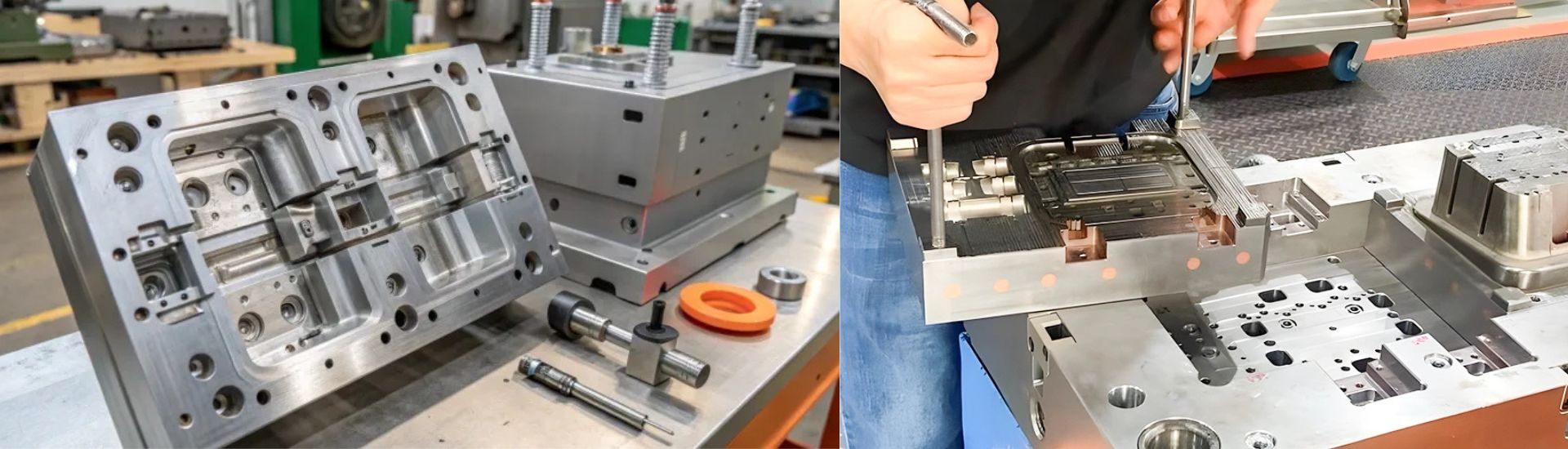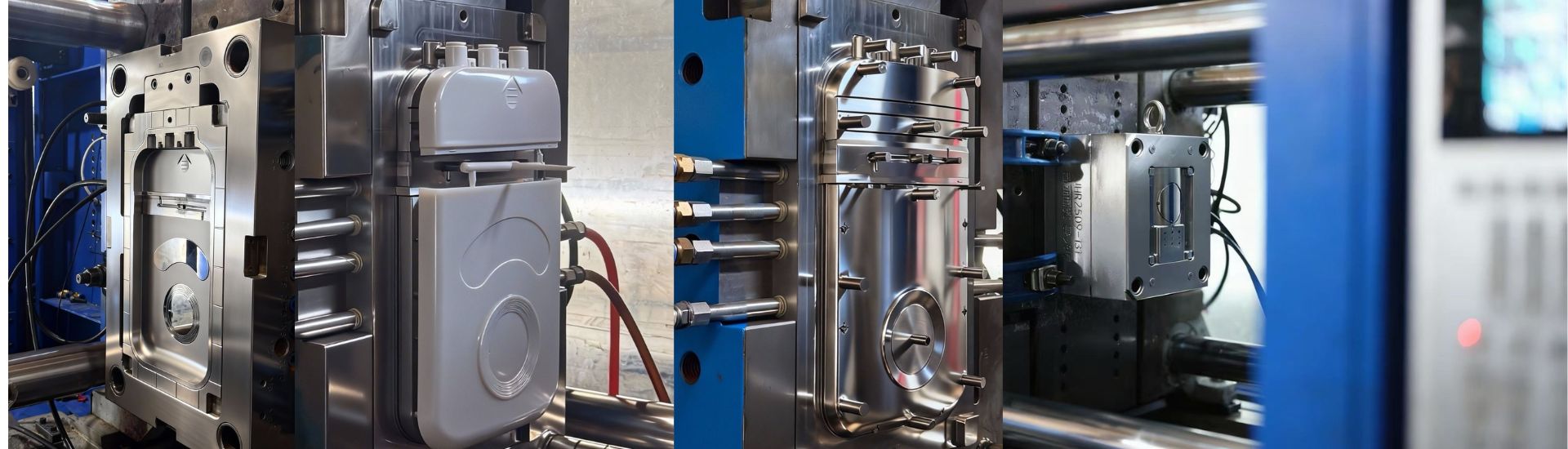


A product manager once asked us why his screwdriver handle needed a mold that cost 60% more than a single-material tool. The answer: the soft rubber grip his marketing team wanted is exactly what two-shot injection molding delivers â and nothing else delivers it as cleanly. But that premium is not always justified. For some parts, two-shot molding saves money by eliminating assembly. For others, it is an expensive way to get a result a cheaper process can match.
This guide breaks down what two-shot molding actually is, where the extra cost comes from, and â most importantly â a practical framework for deciding whether it is worth it for your part. The short version: run the numbers against your assembly and labor costs before you decide, and get a DFM review before you commit to steel.
What Is Two-Shot Injection Molding?
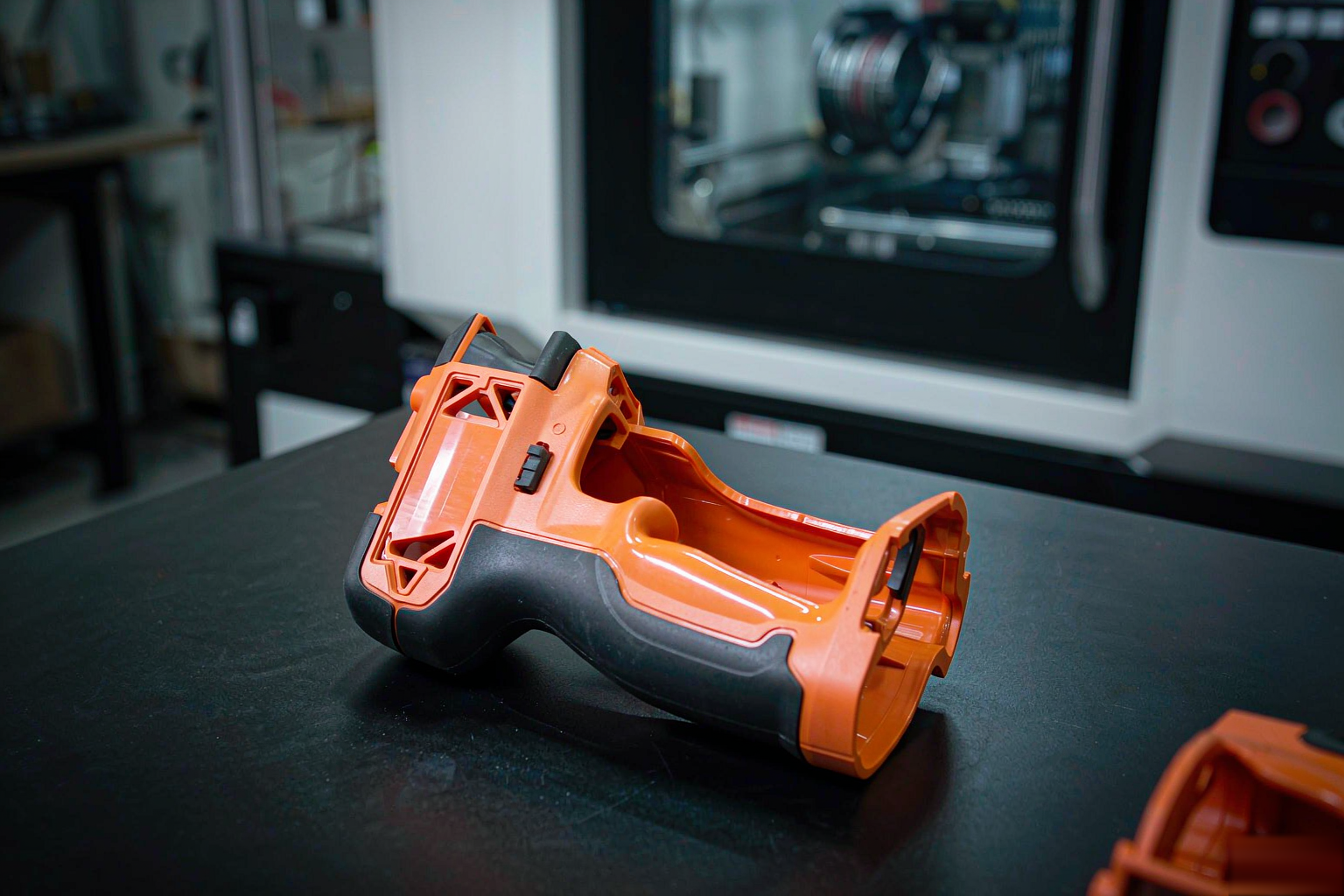
Two-shot injection molding (also called 2K, dual-shot, or multi-shot molding) molds two different materials into a single part in one machine cycle, using a specialized mold and press. The first shot forms a substrate â usually a rigid plastic such as polypropylene (PP), ABS, or polycarbonate (PC). The mold then rotates or the substrate transfers to a second cavity, where a second material is injected directly onto or around the first.
Because the second material is molded onto the substrate while it is still warm, the two materials fuse at the molecular level. There is no adhesive, no mechanical fastener, and no secondary assembly step. The bond is permanent and, with the right material pairing, can be waterproof.
The most common configurations are:
- Soft-touch overmold: a rigid body with a TPE or TPU grip â power tools, toothbrushes, razors, controllers.
- Rigid-over-rigid two-color: two contrasting plastics for branding or legends â appliance panels, keycaps, automotive switch faces.
- Seal-in-place: a flexible TPV or TPE gasket molded onto a rigid housing, replacing a separate glued gasket â electronics enclosures, medical devices, automotive connectors.
What the Extra Cost Actually Buys You
Two-shot tooling and processing genuinely cost more. Understanding where the premium goes helps you judge whether it pays back:
- Tooling cost: typically 30â60% higher. A two-shot mold is effectively two molds in one body â two cavity sets, more complex runner systems, and precision rotation or core-pull mechanics. More steel, more machining, more tuning.
- Machine cost: higher hourly rate. Two-shot presses are larger and less common than standard machines, so the hourly rate runs higher â often 20â40% more.
- Longer development cycle. More design iterations for the bond interface, more mold trials, and tighter process windows.
- Higher scrap risk during ramp-up. Bonding quality depends on surface temperature, timing, and material drying. First articles take longer to dial in.
So why pay it? Because the premium is a tooling premium, and tooling is a one-time cost. What two-shot molding removes is a per-part cost: assembly labor, adhesive dispensing, gasket placement, secondary machining, and the quality escapes that come with any manual step. At volume, the math often flips decisively.
When Two-Shot Molding Is Worth the Investment
In our experience, two-shot molding pays for itself in five situations:
- 1. You are currently assembling two parts by hand. If an operator snaps, screws, or glues a soft component onto a rigid body every cycle, two-shot molding deletes that labor line entirely. At 500,000 parts per year, even 10 seconds of assembly per unit is significant money.
- 2. The bond must be waterproof or permanent. Molded-in seals outperform glued gaskets in immersion, autoclave, and drop tests. Medical device housings, outdoor sensors, and automotive electronics all benefit.
- 3. You need consistent soft-touch feel at scale. Adhesive-bonded grips delaminate and vary batch to batch. A molecular bond does not.
- 4. Tight tolerance between the two materials matters. Two-shot keeps the material-to-material interface within mold tolerances (±0.05 mm is achievable). Assembled parts inherit the tolerance stack of both components.
- 5. High volumes amortize the tool premium quickly. As a rule of thumb, if annual volume exceeds roughly 50,000 pieces and you would otherwise have a separate assembly or bonding operation, two-shot usually wins on total cost of ownership.
When a Cheaper Alternative Wins
Two-shot molding is not the default answer. These cases favor simpler processes:
- Low volumes (under ~10,000 pieces per year). The tool premium can take years to amortize. Secondary overmolding or assembly is more economical.
- The second material can be added off-line. Conventional overmolding â molding TPE onto a finished substrate in a standard single-material press â costs far less in tooling and works well when bond requirements are moderate and volumes do not justify the premium.
- Design is still changing. Two-shot locks in both material geometries in one tool. If your part will iterate, keep the processes separate until the design stabilizes.
- Metal inserts are involved. If your “second material” is actually a metal thread or contact, insert molding â not two-shot â is the right process, often in a standard press.
- Paint or pad printing achieves the visual. Two-color branding effects sometimes have cheaper routes, though paint wears and adds an environmental compliance burden.
Quick Reference: Two-Shot vs the Alternatives
| Factor | Two-Shot Molding | Secondary Overmolding | Assemble + Adhesive |
|---|---|---|---|
| Tooling cost | High (30â60% premium) | Lowâmedium | Lowest |
| Per-part cost at volume | Lowest | Medium | Highest (labor) |
| Bond strength / sealing | Excellent, permanent | Good | Variable, operator-dependent |
| Break-even volume | â 50k+ parts/year | â 10kâ100k | Prototypes to ~50k |
| Design flexibility after tooling | Low (one tool, both materials) | Medium | High |
| Best for | High-volume soft grips, molded seals | Mid-volume overmolded parts | Low volume, evolving designs |
The Real Cost Drivers You Control
Even after committing to two-shot, your design decisions move the price more than the mold maker’s quote does:
- Keep the two materials compatible â or design for mechanical interlock. Compatible pairs (TPE-on-PP, TPE-on-ABS/PC) bond chemically. Incompatible pairs need interlock features, which add tool complexity.
- Minimize the overmolded area. Every square millimeter of the second shot adds cavity complexity. Grip pads and seal channels are cheap; full-surface second shots are not.
- Uniform wall thickness in both shots. Same rule as single-shot molding â thick sections sink, thin sections short-shot. In two-shot, they also mis-time the bond window.
- Design the substrate for handling. The first shot must survive rotation or transfer without warping. Thin, floppy substrates are a common cause of two-shot scrap.
- Consider cavity count early. A 2+2 two-shot family mold may cost less than two sequential single-cavity tools and halves your cycle cost per part.
Material Pairing Rules That Make or Break Bonding
The bond between the two shots is chemistry, not luck. These pairings bond well without adhesives or interlocks:
- TPE or TPU onto PP â the workhorse of soft grips; excellent bond, low material cost.
- TPE onto ABS or PC â stiffer substrates for housings and structural parts; good bond with TPEs formulated for engineering resins.
- TPV onto PP â the standard for molded-in seals that must survive heat, oils, and compression set.
- Rigid onto rigid (PC/ABS, POM/PA) â for two-color parts; needs compatible melt temperatures.
Pairings to treat with caution: TPE onto PA (nylon) or PBT without special grades, and any combination where the second material’s melt temperature would deform the substrate. If your material pairing is marginal, your molder should say so during DFM â not after the first trial fails.
A Simple Framework for Deciding
Run your part through these five questions:
- What does the assembly (or bonding) operation cost per part today â including scrap and rework? Multiply by annual volume. This is your two-shot savings budget.
- How much higher is the two-shot tool quote? The payback period is the tool premium divided by the per-part savings. Under 12â18 months is a strong signal.
- Is the bond functional or cosmetic? Functional bonds (seals, structural grips) justify the premium. Purely cosmetic two-color effects sometimes do not.
- Is the design stable? If a redesign is likely within the tool’s life, the inflexibility of a two-shot tool is a real cost.
- Have you pressure-tested the material pairing? Ask for bond-strength data or a trial coupon mold before committing the production tool.
If two or more answers favor two-shot, the process is almost certainly worth the premium for your application.
Get a Two-Shot DFM Review from D-top Mould
Two-shot molding rewards good decisions made early â material pairing, shot geometry, cavity count, and the bond interface all get locked in before steel is cut. Getting those decisions reviewed by a molder who runs two-shot tools every week is the cheapest insurance you can buy.
At D-top Mould, our engineers review your CAD, assess the bond interface and material compatibility, and quote both two-shot and secondary-overmolding routes so you can compare real numbers â not guesses. We build multi-shot molds for overseas buyers across power tool, medical, automotive, and consumer product applications, and we quote in hours, not days.
Send us your 3D drawing for a free DFM review, or request a 12-hour quote â and find out whether two-shot molding is worth it for your part before you spend a dollar on tooling.