

Every injection mold has a runner system — the network of channels that carries molten plastic from the machine nozzle to each cavity. There are two fundamentally different ways to build it, and the choice between a hot runner and a cold runner affects your tooling budget, your piece-part cost, your scrap rate and the cosmetics of every part you ship. Buyers often discover this choice late, after two suppliers quote the same mold with a 30–60% price gap — because one quote includes a hot runner system and the other does not. This guide explains how each system works, what it really costs, where each one wins, and how to decide which fits your part, your resin and your volume.
What a Runner System Actually Does
When the injection unit shoots plastic, it enters the mold through a sprue, then flows through runners — channels machined into the mold surface — and finally passes through a gate into each cavity. What happens to that plastic after the part fills is what separates the two systems:
- A cold runner is simply unheated. The plastic in the sprue and runners solidifies along with the parts and is ejected together with them. Someone then separates the parts from the runner — by hand, by degating fixture or automatically — and the runner plastic is either reground and reused or scrapped.
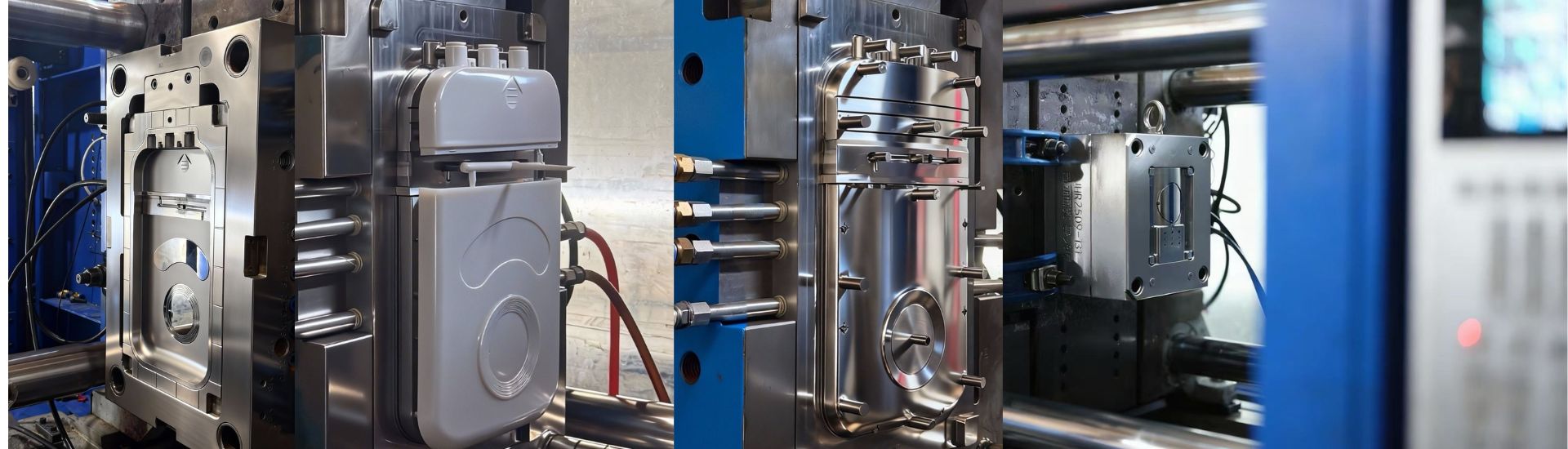
- A hot runner keeps the plastic in the sprue and runners permanently molten, using an electrically heated manifold and heated nozzles positioned above each cavity. The plastic travels from the machine nozzle straight to each gate, and only the parts themselves are molded and ejected. There is no runner to remove.
Both systems produce identical-quality parts when well engineered. The difference is everything around the parts: material waste, cycle time, labor, maintenance and the price of the mold itself.
Cold Runner Systems: Simple, Cheap, Proven
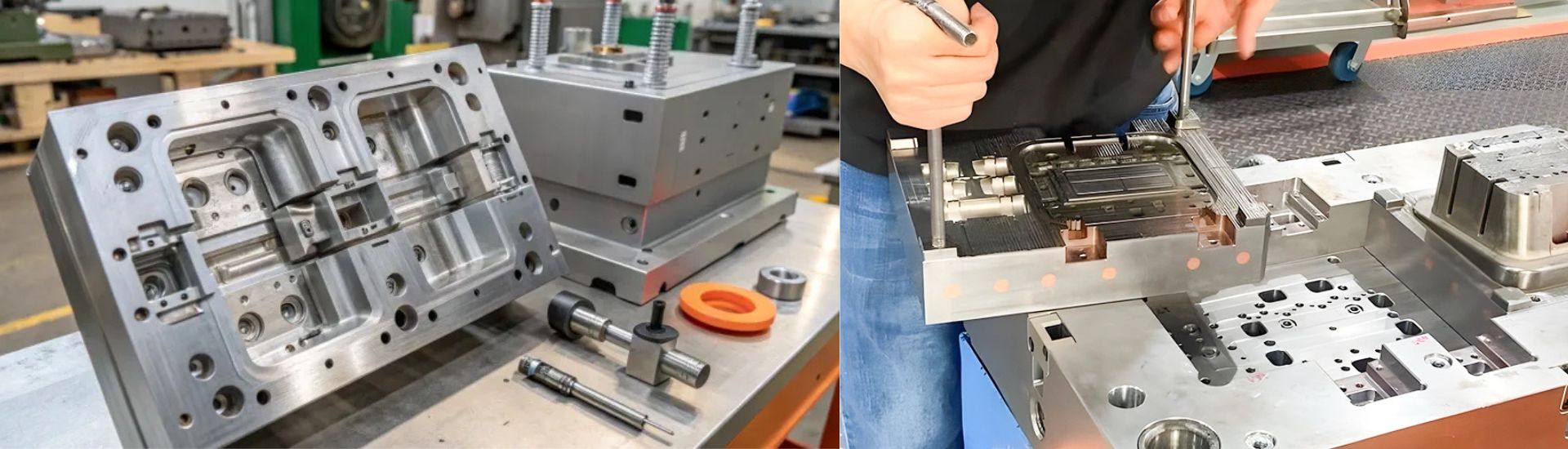
A cold runner mold is the classic two-plate mold: sprue bushing, runner channels cut into both mold halves, gates at each cavity — no electrical components, no temperature controllers, no manifold to buy. That simplicity carries real advantages:
- Lowest tooling cost. For a small mold, the runner system is essentially free — it is just machined steel. A comparable hot runner system can add USD $2,000–$15,000+ to a mold depending on the number of drops and the brand of manifold.
- Fast to build and easy to modify. Runners can be re-cut, re-balanced or re-gated during mold trials with nothing more than machining time. There is no vendor lead time and no controller to program.
- Fewer failure modes. No heaters to burn out, no thermocouples to fail, no nozzle leaks or drool, no temperature controller to maintain. A cold runner mold maintained properly can run for a decade or more with basic upkeep.
- Color-change friendly. Purge the barrel and the runner, and the next shot is the new color. Hot runners trap material in manifold channels, so color changes take longer and waste more resin.
- Better for heat-sensitive resins. Rigid PVC and some flame-retardant or glass-filled compounds that degrade with long residence time at high temperature are often safer in cold runners, where material never sits hot in a manifold between shots.
The trade-offs are equally clear: every shot produces a runner that must be removed. That means cycle time spent molding and cooling plastic you throw away, degating labor or automation, and either regrind handling or material loss. For small, precise parts, the runner can weigh many times more than the parts themselves.
Hot Runner Systems: No Scrap, Faster Cycles, Higher Price
A hot runner mold replaces the solidified runner with a heated manifold block inside the mold and a heated nozzle feeding each gate (or a small group of cavities). The manifold holds the plastic at processing temperature between shots, so each cycle molds only the parts. The benefits show up most strongly in production:
- Near-zero material waste. No runner means no regrind and no scrap rate from runner disposal — a decisive advantage for engineering resins (PC, PEEK, glass-filled nylon) where regrind is often prohibited, and for expensive resins where even a 30% runner ratio is real money.
- Shorter cycles. The mold no longer waits for a thick runner to solidify. Cycle reductions of 15–40% are typical because the cooling clock is set by the part wall, not the runner diameter.
- Better pressure control and balance. Each nozzle can be zoned and controlled independently, which improves packing consistency across all cavities — critical in multi-cavity molds where every part must weigh and dimensionally match its siblings. Valve-gated hot nozzles add precise sequential filling and clean, vestige-free gate marks.
- Lower labor and automation cost. Parts drop out degated. No degating station, no robot to separate runners, no operator trimming parts by hand.
- Design freedom. Gate locations can be placed away from the part edge, large parts can be filled from multiple nozzles in sequence, and family molds can feed cavities of different sizes with balanced pressure.
The costs sit on the other side of the ledger: a higher mold price, a controller cabinet that occupies machine space, a 2–4 week vendor lead time on branded systems, heater and thermocouple maintenance, and tighter process discipline. A leaked nozzle or a frozen drop can stop production for hours, and manifold temperature errors show up directly as short shots, gate freeze or burned material.
Cost Comparison: Mold Price vs Cost per Part
The right question is never “which system is cheaper?” It is “which system is cheaper for my volume?” The hot runner premium is fixed; its savings scale with every part you mold:
| Factor | Cold Runner | Hot Runner |
|---|---|---|
| Tooling cost | Baseline | +$2,000–$15,000+ depending on drops and brand |
| Material usage | Runner on every shot; reground or scrapped | Parts only; near-zero waste |
| Cycle time | Longer — runner must cool and be ejected | 15–40% shorter in most applications |
| Labor / degating | Manual or robotic degating required | None — parts eject finished |
| Maintenance | Minimal; standard mold upkeep | Heaters, seals, thermocouples, controller |
| Color change | Fast purge | Slower; resin trapped in manifold |
| Multi-cavity balance | Naturally balanced; sensitive to runner wear | Individually zoned and controlled |
| Best fit | Low–mid volume, color changes, PVC, prototypes | High volume, expensive resins, tight multi-cavity tolerances |
A practical break-even example: a 4-cavity mold running a commodity resin with a 35% runner ratio might waste 6 kg of material per hour of running time. At high volumes, that waste plus degating labor and the longer cycle routinely exceeds the hot runner premium within the first year. The same mold running 50,000 parts a year may never reach break-even — and the cold runner’s simplicity wins. Volume, resin price and part size drive the math far more than any rule of thumb.
Quality: Where the Two Systems Really Differ
Part quality is where the decision gets less intuitive. Cold runners are often assumed to be “lower quality,” but that is not accurate:
- Melt quality. A cold runner exposes material to heat for one cycle only. A hot runner holds material hot continuously — great for consistency, but a risk for residence-time-sensitive resins. Degradation in a hot runner shows up as splay, black specks or burned streaks; see our guide to common injection molding defects for how these present.
- Gate marks. Cold-runner gates (edge, pin-point, submarine) leave a small nub that is trimmed. Hot-runner gates leave their own vestige — a hot tip leaves a tiny dimple, a valve gate leaves a clean circular mark. For cosmetic surfaces, valve-gated hot runners are often the best option, not the worst.
- Multi-cavity consistency. In a well-balanced cold runner, all cavities fill identically — until the runner wears or the balance shifts. Hot runners hold cavity-to-cavity consistency over millions of cycles via zone control, which is why medical and automotive multi-cavity molds are overwhelmingly hot-runner designs.
- Dimensional stability. Removing the runner from the cooling equation reduces warpage influence from uneven packing on large parts gated from multiple points.
In short: a good cold runner mold makes excellent parts. A good hot runner mold makes excellent parts more consistently and more cheaply at scale. A badly engineered system of either type makes scrap.
Special Cases Worth Knowing
- Three-plate cold runner molds. A middle path for multi-cavity parts that need central gating without a hot runner. The runner is held on a middle plate and dropped separately. Cheaper than a hot runner, but taller, slower to cycle and still produces a runner.
- Valve-gated hot runners. Pneumatically actuated pins open and close each gate. They cost more than open hot tips but deliver near-invisible gate marks and sequential filling control — the standard for visible automotive interior parts and large cosmetic surfaces. For less demanding parts, open hot-tip nozzles give most of the benefit at lower cost.
Five Questions to Ask Before You Choose
- What is my annual volume, honestly? Under 100,000 parts per year on a commodity resin rarely justifies a hot runner; over 1,000,000 it almost always does. The interesting zone is in between — run the numbers, not the habit.
- What does my resin cost, and can it use regrind? Engineering resins and medical grades often forbid regrind, which turns every cold-runner shot into pure cost.
- How many cavities, and how tight is cavity-to-cavity variation? Beyond 4 cavities, zone-controlled hot runners pay for themselves in consistency.
- Who maintains the system, and where? If the mold runs overseas or at a molder without hot-runner service capability, factor response time into the risk.
- What does the quote actually include? When comparing suppliers, confirm whether the low quote is a cold-runner version of the same part — and what the runner disposal economics look like on your press. Our article on hidden costs when sourcing molds from China covers how quote definitions can differ.
If you are unsure where your part lands, ask for both configurations priced side by side. A competent mold maker will show you the tooling delta and the projected piece-part savings so you can decide with data. The decision also interacts with steel selection — hot runner molds concentrate heat and pressure at each nozzle, which affects steel choice around the gates (see our mold steel selection guide) — and with the overall tooling lead time, since branded hot runner systems add weeks to the build.
Get a DFM Review Before You Pick a Runner
Hot runner or cold runner is a manufacturing decision that deserves engineering input, not a default. Send your 2D or 3D drawings, target resin, annual volume and cosmetic requirements to D-TOP MOLD. Within 12 hours you will receive a detailed quotation with a free DFM review — including our recommendation on runner system, the tooling cost difference between hot and cold configurations, and the projected cost-per-part at your volume, so you can choose the system that actually makes money on your part.