

Sourcing injection molds from China can save 30–50% against Western tooling prices — but only if the supplier you choose actually makes what it sells. The market includes excellent mold makers, and it also includes trading companies with no machines, workshops that subcontract everything, and salespeople who promise tolerances the steel was never cut to hold. The difference rarely shows in a quotation. It shows in how a supplier answers the right questions — and whether the answers survive verification. This guide gives you the ten questions experienced buyers ask before placing a tooling order, how to read the answers, and the red flags that should stop a deal.
Why Qualification Matters More Than the Quote
A mold is not a catalog item. It is a one-time engineering project worth thousands of dollars, and every downstream cost — cycle time, maintenance, repairs, part quality — is locked in by how well it was designed and built. Two suppliers can quote the same part within 5% of each other and deliver completely different tools: one with certified steel, documented trials and clean cooling layout, and one with recycled P20, no flow analysis and gates placed wherever the electrode was easiest to cut.
The painful part is that you cannot judge the mold by looking at the samples. First articles from a poor mold can look perfect — for a few hundred shots. Problems appear at shot 20,000, in the form of wear, flash, warpage drift and unplanned repair bills. Qualification is how you move that discovery from your production floor to the supplier’s quotation stage. If hidden costs are your concern, our guide on avoiding hidden costs when sourcing molds from China pairs well with this one.
Before You Ask Anything: Signals You Can Check Yourself
Half of the qualification happens before the first question. These checks cost you nothing:
- Who answers you? If the person replying cannot discuss gate types, steel hardness or shrinkage compensation without checking with “the engineer,” you are likely talking to a trading company. That is not automatically disqualifying — but it must be disclosed, because it changes who is accountable when the mold needs a fix.
- What do they ask you? A real mold maker responds to your RFQ with questions: part material, expected lifetime volume, tolerance criticality, surface finish requirements. A reseller responds with a price. A supplier who quotes without asking about annual volumes does not understand how mold steel should have been selected — see our mold steel selection guide for why volume decides the steel.
- Do they show their floor? Request recent photos or a live video walkthrough of the machining area. A 10-minute video call from the workshop tells you more than ten polished brochures.
- Response quality. Vague timelines, refusal to provide steel certificates, or a quote that arrives in two hours without any engineering discussion are all data points.
The 10 Questions That Separate Mold Makers from Middlemen
Ask these ten questions in writing. The goal is not the answers themselves — it is how specifically, how consistently and how verifiably the supplier answers.
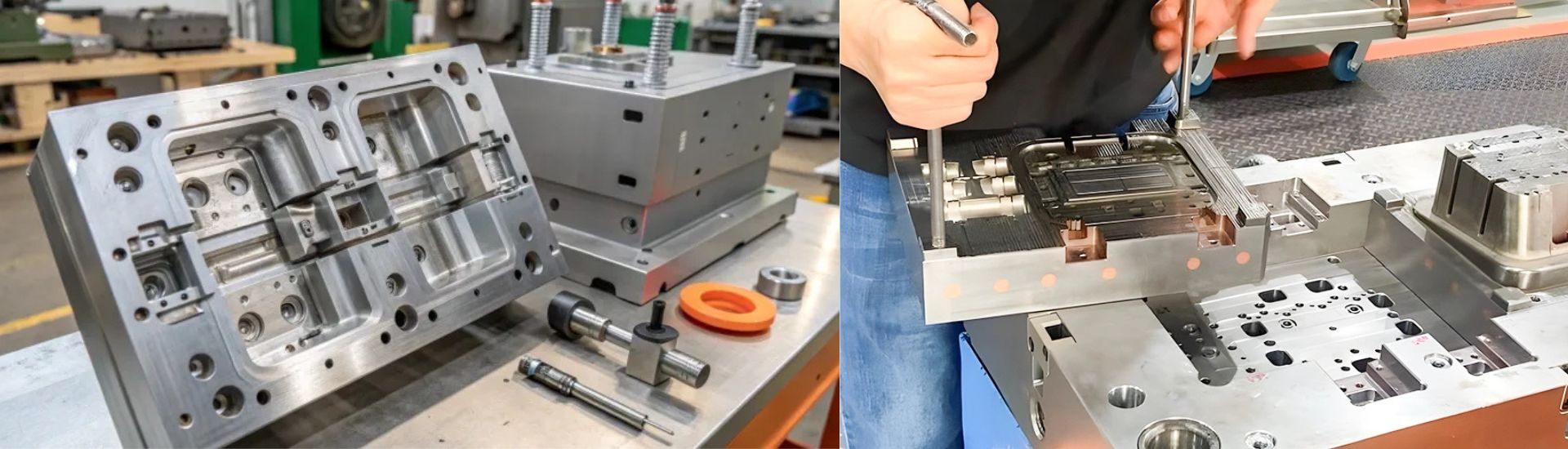
1. Do you manufacture the molds in-house, and which processes are in your own workshop? Ask them to list their equipment: CNC milling, EDM, wire cutting, grinding, spotting press, molding machines. In-house tooling means the people who cut the steel also fix it when something is wrong — the single biggest driver of after-sales speed. A supplier who outsources machining cannot control delivery dates or repair turnaround.
2. What steel grade do you recommend for my project, and why? The answer should reference your resin (corrosive PVC or flame-retardant grades demand stainless steels like S136), your annual volume (P20 for shorter runs, H13 hardened for high volumes), and surface requirements (NAK80 for high-gloss cosmetic parts). A supplier who answers “we use P20, good quality” for every project is quoting a mold, not engineering one.
3. Can you provide mill certificates for the steel? Every reputable steel supplier issues material certificates traceable to the heat number. Refusal, or vague promises, strongly suggests recycled or mislabeled steel — a common way to cut 10–15% from a mold price. Ask for the certificate with the quotation, not after the deposit.
4. Will you run mold flow analysis, and will you share the report? For parts with long flow paths, varying wall thickness or tight flatness requirements, simulation catches weld lines, air traps and warpage before steel is cut. Ask to see a sample report from a previous project. A “we don’t need it” answer on a geometrically complex part is a red flag; a report you can actually read, with recommendations, is a good sign.
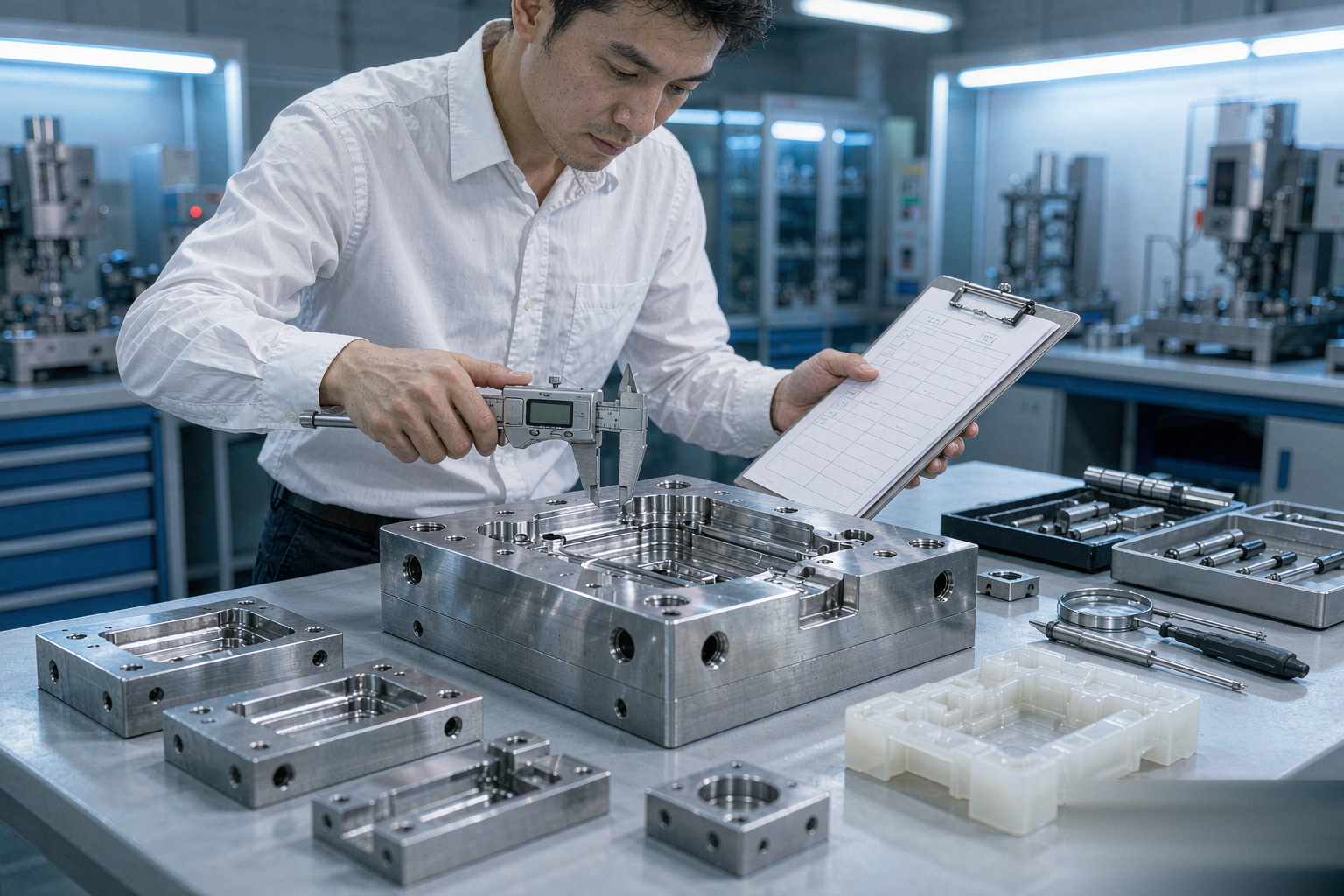
5. What tolerance can you hold, and on which features? Expect honest differentiation: general dimensions ±0.1 mm is routine; critical fits ±0.02–0.05 mm demand precise machining and measurement capability. A supplier who promises ±0.01 mm everywhere without asking which features are critical is telling you what you want to hear. Share your drawing and let them mark up the tight-tolerance features.
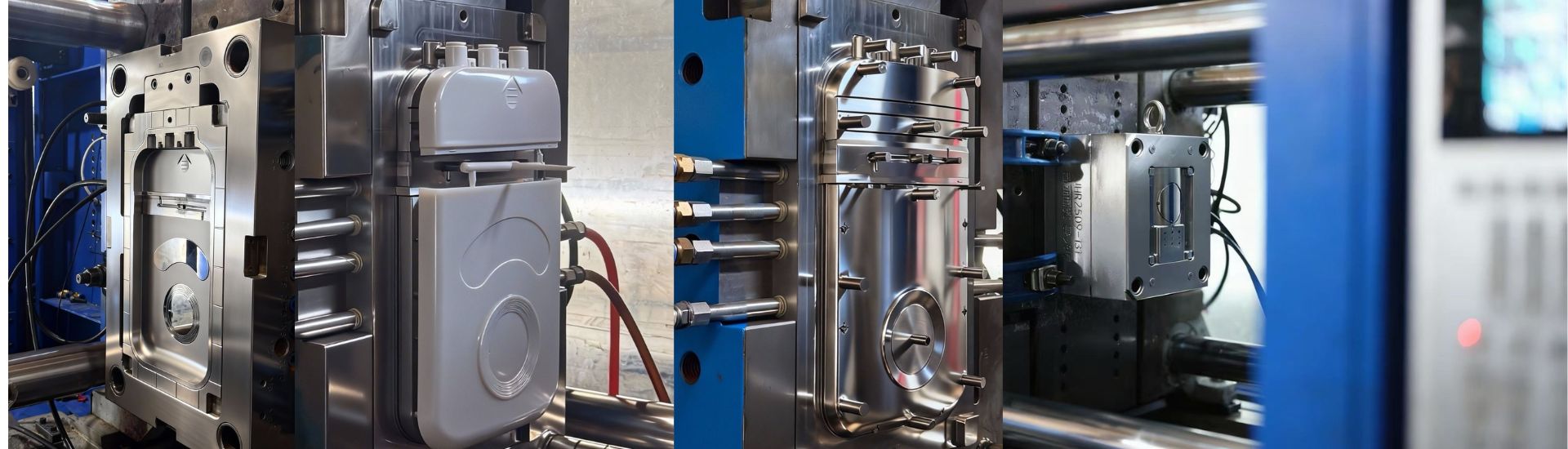
6. What does your trial (T1) process include, and what do I receive? You want: molding trials on a machine of the correct tonnage, full sample reports with dimensions, photos of the parts, steel certificates, and a clear problem list the supplier identifies themselves before you do. Ask how many free trials and modifications are included and how long each iteration takes.
7. How do you handle design changes and mold modifications? Every project has them. Ask for their process: how changes are quoted, how they verify that a modification did not break something else, and typical turnaround. Suppliers with in-house tooling usually turn small modifications in days; those who subcontract measure in weeks.
8. What warranty do you offer on the mold, and what does it exclude? A confident mold maker warranties the tool against defects in materials and workmanship for a defined period or shot count, and states exclusions clearly (wear items like sliders and ejector components, damage from misuse). No warranty, or a warranty full of unwritten conditions, predicts expensive arguments later.
9. Can you provide references from customers in my market? Two or three export customers willing to answer a short email is reasonable to request. Their export experience also matters practically: English technical communication, understanding of Western quality expectations, and familiarity with shipping and documentation.
10. Who owns the mold, and how is my intellectual property protected? Confirm in the contract that you own the tool (you paid for it), that it will not run for other customers, and ask how they handle drawings — an NDA should be standard, and serious suppliers sign without drama.
How to Read the Answers
The value of these questions is in the pattern of responses. Use this quick reference:
| Answer You Get | What It Usually Means |
|---|---|
| Specific: steel grades with hardness, machine tonnages, named processes | Direct manufacturer with real engineering capability |
| Answers your technical questions with further questions | Engaged engineers — a very good sign |
| Everything is “yes, no problem,” no documents offered | Sales-driven; expect gaps at trial and delivery stages |
| Refuses steel certificates or flow analysis reports | High risk of recycled steel / no engineering process |
| “We have a partner factory” without disclosure of who | Trading company — get full transparency or walk away |
| Warranty terms vague or verbal only | After-sales disputes are nearly guaranteed |
One more principle: cross-check claims. If a supplier says their workshop has 30 CNC machines, ask for a video call that walks through the shop floor. If they claim ISO 9001, ask for the certificate with scope and validity dates. Honest suppliers expect verification and answer it routinely.
Go Beyond Questions: Verify Before You Commit
Questions qualify a supplier on paper; verification qualifies them in reality. Depending on project size, add one or more of these steps before or with your purchase order:
- Video audit — a structured 30–60 minute call walking through machining, assembly, and molding areas. Free and surprisingly revealing: you see organization, machine park and housekeeping with your own eyes.
- On-site audit — worthwhile for high-volume programs. Review equipment lists against reality, check calibration records, and meet the engineers who will run your project.
- Paid feasibility study or DFM review — ask the supplier to critique your part design before quoting. The depth of their feedback (wall thickness, draft angles, gate strategy, steel suggestion) is a direct sample of their engineering competence. Our DFM checklist shows the rules a serious partner should raise unprompted.
- Sample review from a similar project — parts molded from a comparable tool tell you about their surface finish, gate quality and dimensional discipline.
How D-top Mould Answers These Questions
We encourage buyers to use exactly these questions on us — and on any supplier they compare. Here is the short version of our answers:
- 100% in-house tooling. CNC machining, EDM, wire cutting, grinding and mold spotting are all under our own roof, and we mold the first articles ourselves on our own machines. Your mold is built and validated by the same team, and modifications do not queue behind a subcontractor’s schedule.
- Engineering-first quoting. Every quotation comes back with material recommendations matched to your resin, volume and surface requirements, plus a free DFM review that flags issues before steel is cut. Our plastic material selection guide reflects the same thinking we apply to your part.
- Documents by default. Steel mill certificates, mold flow analysis reports, trial reports with dimensional data — provided with the project, not extracted from us.
- Transparent warranty and IP terms. You own your mold; written warranty; NDA standard.
Get a DFM Review and a 12-Hour Quote
Send your 2D or 3D drawings, target material, annual volume and tolerance requirements to D-top Mould. Within 12 hours you will receive a detailed quotation plus a free DFM review from our engineering team — including our recommended steel grade and the reasons behind it. Use our answers as the benchmark for every other supplier you are evaluating: if theirs are less specific, you have learned something important before spending a single deposit.