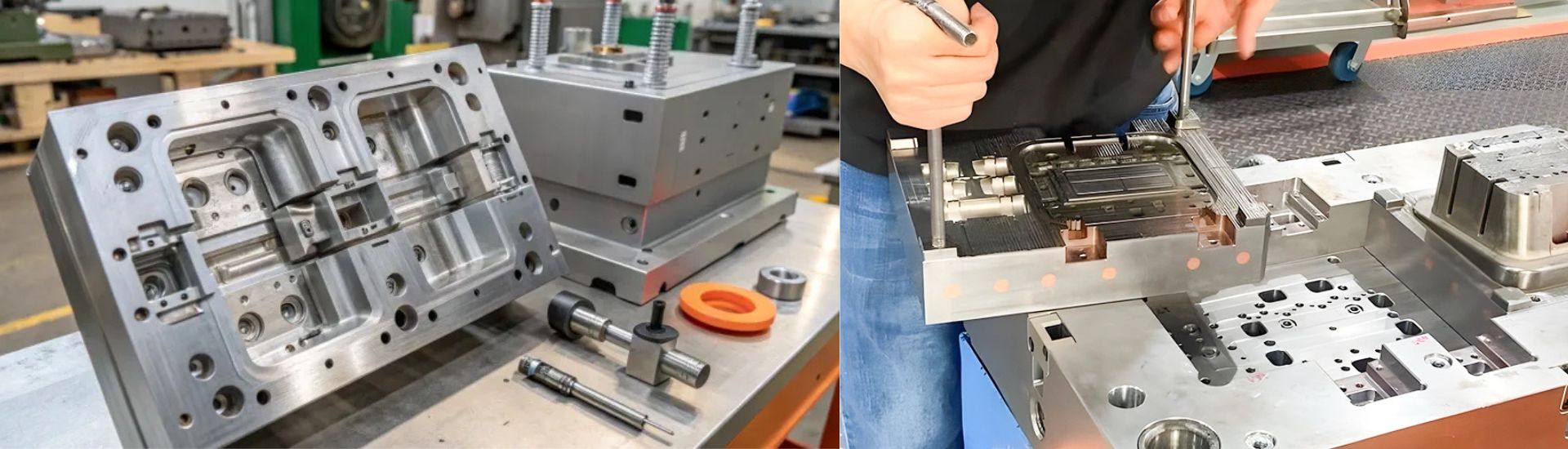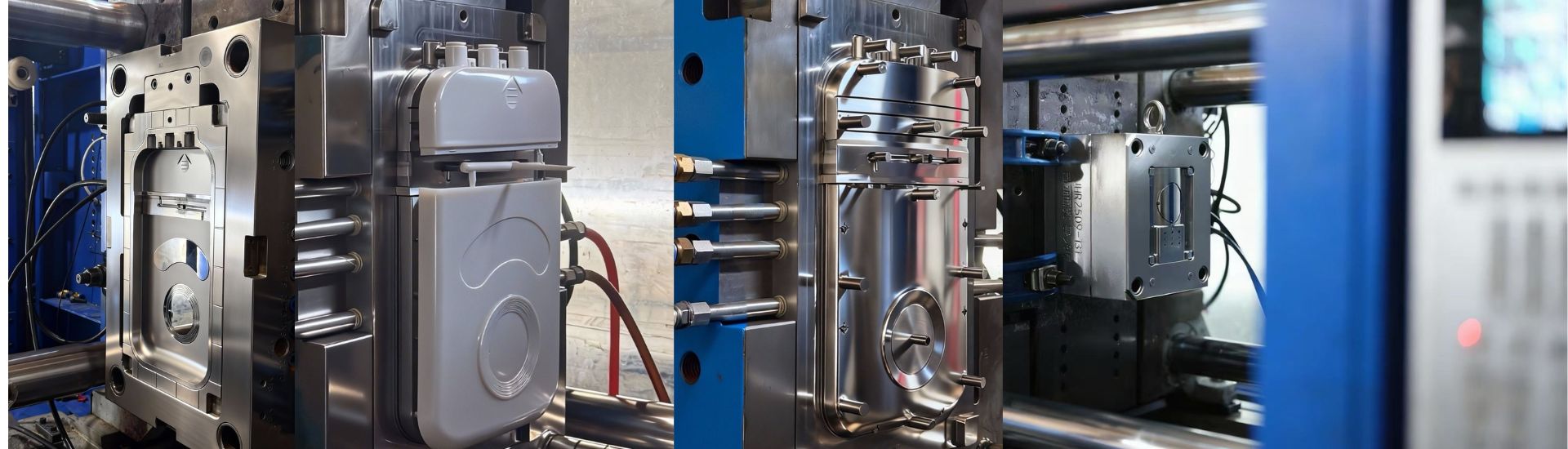


When a plastic part needs to combine two materials — a rigid housing with a soft-touch grip, a metal threaded insert sealed inside a plastic boss, or a rubber seal molded over a connector shell — you are choosing between two closely related processes: overmolding and insert molding. The two terms get used interchangeably, but they are not the same thing, and picking the wrong one can add cost, slow down your tooling, or cause a bonding failure in the field.
This guide explains the difference in plain terms, shows you when each process wins, and gives you the design rules and material pairings that make multi-material parts work. If you are sourcing a mold from China and want to avoid a costly redesign, the short version is this: get a DFM review before you cut steel — and we will tell you exactly how at the end.
What Is Overmolding?
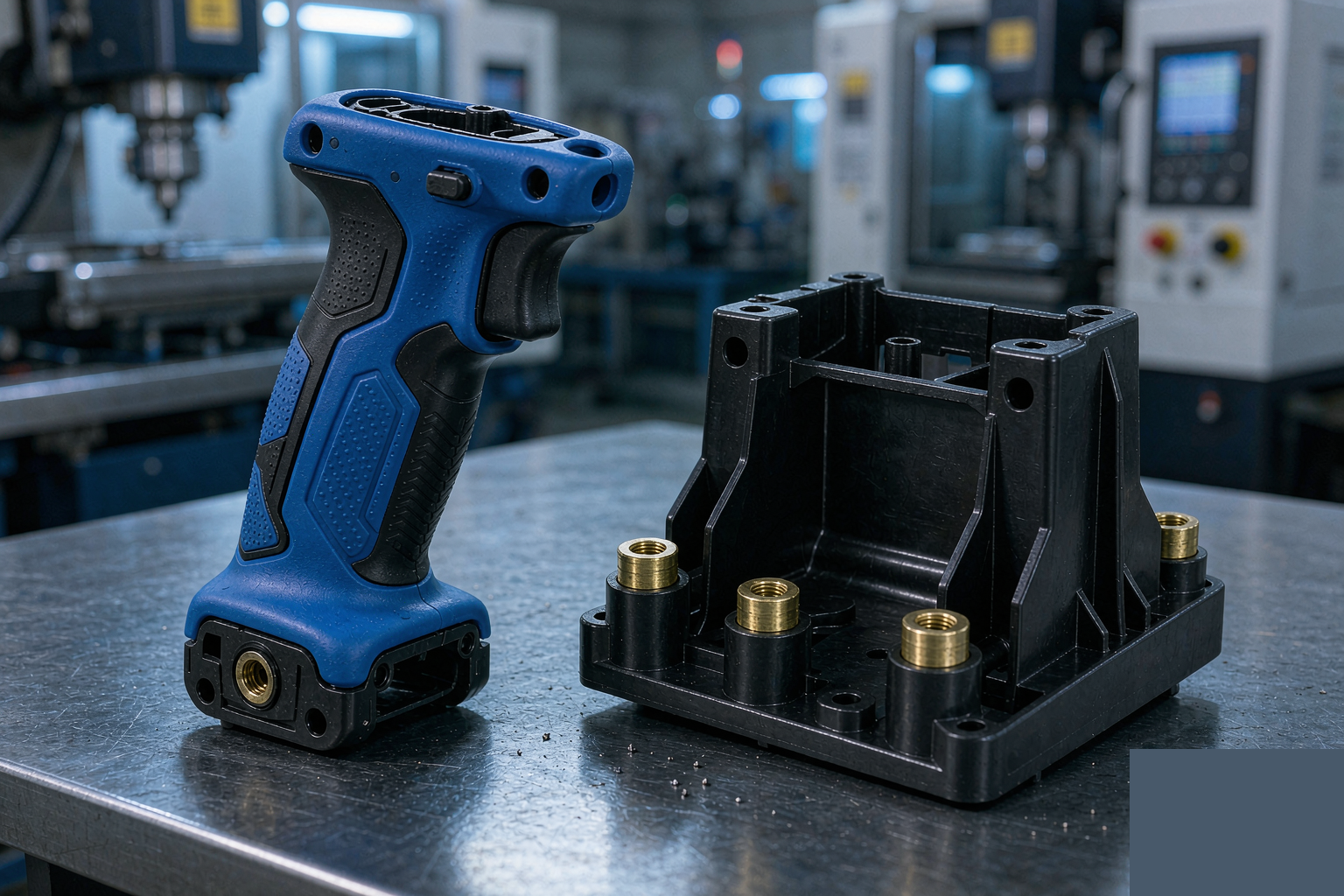
Overmolding is a two-step process where a second material is molded over a first, already-molded part. The classic example is a screwdriver handle: a rigid core (usually polypropylene or ABS) is molded first, then a soft elastomer (TPE or TPU) is injected over it to create a comfortable, non-slip grip.
The two materials bond either mechanically (through interlocking features) or chemically (through a compatible material pair that fuses at the interface). The result is a single finished part with two distinct layers, each doing a different job — the substrate provides strength and structure, while the overmold provides grip, sealing, vibration damping, or aesthetics.
Overmolding can be done in two ways:
- Two-shot (multi-shot) molding — a single machine with two injection units shoots the substrate, rotates or indexes the mold, then shoots the second material. Fast and consistent, but requires a more expensive two-shot press and tooling.
- Insert overmolding (pick-and-place) — the substrate is molded normally, then manually or robotically placed into a second mold where the overmold is injected. More flexible, lower upfront tooling cost, but slightly slower cycle times.
What Is Insert Molding?
Insert molding is a process where a pre-formed insert — most often a metal part such as a threaded nut, a brass bushing, an electrical pin, or a stamped contact — is placed into the mold cavity, and molten plastic is injected around it to encapsulate it. The insert becomes a permanent, inseparable part of the finished component.
The key difference from overmolding is what the second component is: in overmolding, the second component is another plastic material; in insert molding, the insert is usually metal (though ceramic, magnets, and other rigid inserts are used too). Insert molding replaces the older approach of heat-staking or ultrasonic-welding a metal fastener into a hole, creating a stronger, cleaner, and more repeatable bond in a single molding cycle.
Overmolding vs Insert Molding: Key Differences
Here is the side-by-side comparison that matters for sourcing decisions:
| Factor | Overmolding | Insert Molding |
|---|---|---|
| Second component | Another plastic / elastomer | Usually metal (nut, bushing, pin, contact) |
| Primary goal | Grip, seal, cushion, aesthetics, two-color look | Add threads, conductivity, strength, wear resistance |
| Typical cycle | Two shots (two-shot) or two molds (pick-and-place) | Single shot around a loaded insert |
| Tooling cost | Higher (two cavities or a two-shot press) | Moderate (one cavity + insert handling) |
| Bond mechanism | Chemical or mechanical bond between plastics | Mechanical encapsulation around the insert |
| Best for | Ergonomics, sealing, IP-rated enclosures, branding | Threaded fasteners, electrical contacts, load-bearing joints |
When to Choose Overmolding
Choose overmolding when the value of your part comes from combining two plastic materials with different properties. Common triggers:
- Soft-touch grips and handles — power tools, hand tools, medical devices, and consumer electronics all use a rigid core with a TPE/TPU skin for comfort and slip resistance.
- Seals and gaskets — overmolding an elastomer directly onto a housing creates an integrated, leak-proof seal without a separate gasket assembly step.
- Impact and vibration absorption — a soft outer layer cushions internal components and reduces rattling.
- Two-color branding — logos, indicator windows, and color-coded zones can be molded in rather than painted or stickered on.
Overmolding shines when you want to eliminate an assembly step. Instead of molding a housing and a grip separately and gluing or snapping them together, one overmolded part replaces two components plus labor.
When to Choose Insert Molding
Choose insert molding when your part needs a property that plastic cannot deliver on its own — most commonly threads, conductivity, or structural strength. Typical use cases:
- Threaded fasteners — brass or stainless inserts in plastic bosses allow screws to be driven and removed repeatedly without stripping, which is essential for enclosures and brackets.
- Electrical connections — pins, contacts, and lead frames are encapsulated to create connectors, sensors, and coil bobbins.
- Load-bearing reinforcements — metal plates or shafts embedded in plastic improve rigidity and wear resistance.
- Precision locations — a machined metal insert provides tighter dimensional control than molded plastic can achieve alone.
The payoff of insert molding is durability and precision. A molded-in threaded insert will survive far more assembly and disassembly cycles than a self-tapping screw in a plain plastic boss, and it removes the post-molding cost of heat-staking or press-fitting.
Material Compatibility: What Bonds Together
Getting the material pairing right is the single most common source of failure in multi-material parts. A chemical bond only forms when the substrate and overmold are compatible; otherwise, you must rely on mechanical interlocks.
Reliable chemical-bond pairs for overmolding include:
- PC (substrate) + TPE/TPU
- ABS + TPE/TPU
- PC/ABS + TPE/TPU
- PP + TPE (only specific TPE grades bond to PP)
- PA (nylon) + TPU
Pairs that will not bond chemically (and therefore need mechanical features such as undercuts, holes, or dovetails) include PP with most other plastics, PE, POM (acetal), and PBT in many combinations. POM is notoriously difficult to bond, so overmolding onto acetal almost always requires mechanical interlocking.
For insert molding, the plastic choice is driven by the application — nylon for strength and wear, PBT or PPS for electrical and thermal stability, PP for cost — and the metal insert is typically brass, stainless steel, or copper alloy depending on conductivity and corrosion requirements.
Cost and Lead Time: What to Expect
Cost follows complexity. Here is what typically drives the price of each process:
- Overmolding — two-shot tooling and a two-shot press are the most expensive option, often 30–60% more than a single-material mold. The pick-and-place overmolding route is cheaper on tooling but adds cycle time and labor. You are also paying for two materials and two processing steps.
- Insert molding — tooling is closer to a standard single-cavity mold, but you add the cost of the inserts themselves and the handling system (manual, robot, or in-mold automation). For low-volume parts, manual insert loading keeps tooling costs down; for high volume, automation pays for itself quickly.
Lead time also differs. A two-shot mold is essentially two molds built together, so expect it to take longer to design and build than a comparable single-material mold. A straightforward insert mold with a single cavity and manual loading can often be built in a similar timeframe to a standard mold.
The takeaway: don’t over-engineer the process. If a mechanical interlock or a press-fit insert can achieve the same function as a two-shot overmold, the simpler route is usually cheaper and faster — a point your mold maker should confirm during DFM review.
Design Tips for Multi-Material Parts
A few design rules will save you time and scrap no matter which process you choose:
- Plan the bond interface early. For chemical bonding, keep the substrate surface clean and specify a compatible pair from the start. For mechanical bonding, add positive features (undercuts, through-holes, ribs) so the materials physically lock together.
- Give the second shot somewhere to flow. Wall thickness on the overmold or around the insert should be generous enough to fill without excessive pressure.
- Account for shrinkage. The two materials shrink at different rates; a rigid insert or substrate can warp a soft overmold as it cools. Allow for it in the design.
- Anchor metal inserts. Knurl or groove the outside of a threaded insert so plastic locks onto it mechanically and cannot spin or pull out.
- Think about loading. In insert molding, the insert must be loaded and located every cycle — design a locating feature (a flat, a slot, a pin) so it cannot shift during injection.
Common Applications
Both processes are everywhere in industrial and consumer products:
- Overmolding: power tool grips, toothbrush handles, medical device housings, cable overmolds and strain reliefs, key fobs, and waterproof enclosures.
- Insert molding: electrical connectors and terminal blocks, automotive sensors and solenoid housings, threaded enclosures, gear hubs with metal shafts, and coil bobbins.
If your product spans both — say, a sealed housing that also needs threaded inserts — the two techniques are often combined in the same assembly.
Get a Free DFM Review Before You Commit
Overmolding and insert molding are forgiving processes when the design is right, and expensive mistakes when it is not. The single highest-value step you can take is to run your CAD through a proper design-for-manufacturing review before any steel is cut.
At D-TOP MOLD, our engineers review your part geometry, material pairing, and bond interface, then flag anything that will add cost or risk — often before you have paid for tooling. We specialize in multi-material and insert molding for overseas buyers, and we quote in hours, not days.
Send us your 3D drawing for a free DFM review, or request a 12-hour quote — and let us confirm the right process for your part before you invest in a mold.