


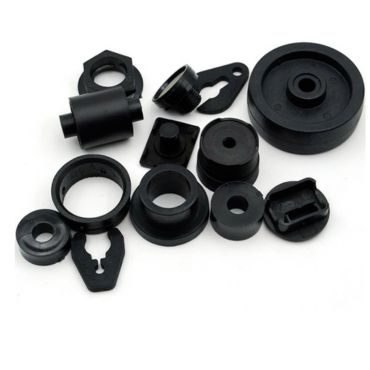
Nylon Injection Molding Services
D-top Mould provides custom nylon (polyamide, PA) injection molding for parts that need strength, wear resistance and durability. Nylon is a versatile engineering plastic used in demanding mechanical and structural applications.
Why Choose Nylon for Your Part
- High strength and toughness — suitable for load-bearing parts
- Good wear and abrasion resistance — ideal for moving parts
- Heat and chemical resistance — performs in demanding environments
- Reinforced grades available — glass-filled for added stiffness
Nylon Molding Applications
- Gears, bushings and bearings
- Automotive engine and under-hood parts
- Electrical connectors and housings
- Industrial machine components
- Fasteners, clips and brackets
Nylon Material and Design Considerations
Nylon absorbs moisture, which can affect dimensions and mechanical properties, so part design and processing must account for conditioning. During DFM we review moisture control, wall thickness, gate location and reinforced grades (such as PA6-GF or PA66-GF) to achieve the required strength and stability.
Nylon Mold Manufacturing at D-top Mould
D-top Mould designs and builds nylon injection molds for prototype and production volumes. Our process includes DFM review, material-grade selection, proper drying and process control, and trial validation before mold shipment.
Frequently Asked Questions
Q: What is the difference between PA6 and PA66?
A: PA66 has higher strength, stiffness and heat resistance; PA6 is cheaper, molds more easily and gives a better surface finish. Both absorb moisture, which must be accounted for in dimensions.
Q: Is nylon good for injection molding?
A: Yes — nylon is a workhorse engineering plastic for mechanical parts: gears, bearings, bushings, fasteners and power tool housings. It needs careful drying and moisture-aware dimensioning.
Q: Why does nylon absorb moisture and how does it affect dimensions?
A: Nylon absorbs 1–3% water by weight, which acts as a plasticizer — improving toughness but changing dimensions. Parts should be designed and inspected to conditioned (equilibrium) dimensions, not as-molded.
Q: What steel is best for glass-filled nylon molds?
A: Glass-filled nylon is abrasive, so use hardened S136 or H13 with nitrided or TiN-coated cavities and hardened screws. See our mold steel selection guide for details.
Q: How much does a nylon injection mold cost?
A: It depends on size, cavitation and steel. A single-cavity nylon mold often ranges from roughly USD 3,000 to USD 15,000+; glass-filled grades push toward hardened steel. D-top Mould quotes within 12 hours.
What We Need for a Quote
Send your 2D or 3D drawings, the nylon grade you need, expected annual volume, and any strength or environmental requirements. Our engineering team will respond with a quotation within 12 hours.